Biden could have released the Epstein Files during his four years in the Oval Office. Why didn't he? And why didn't anyone care?
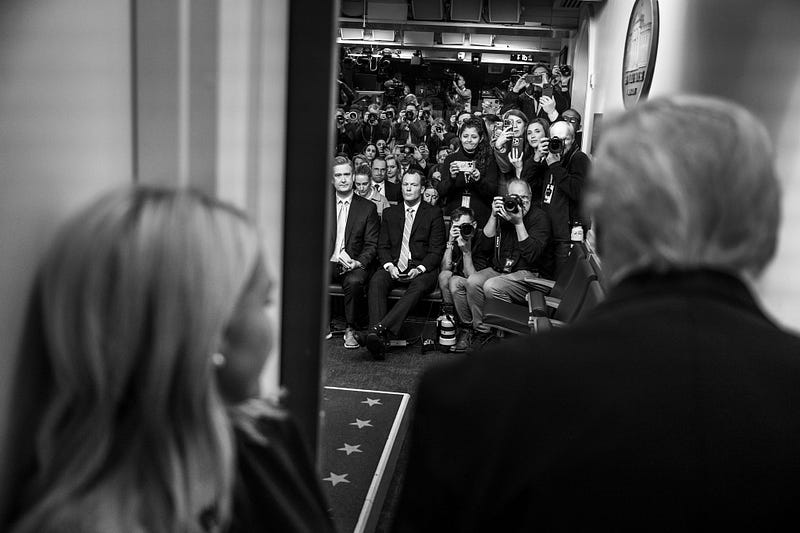
Viewing the current controversy over the “Epstein Files”, one question keeps popping up: Joe Biden was president for four years: Why wasn’t there any pressure on Mr. Biden to release the Epstein Files?
It’s true that there does seem to be far more pressure on Donald Trump’s administration to release the Epstein Files. Downtown DC is papered with “wanted” posters of Attorney General Pam Bondi, calling her a “Pedo Protector.”
And other names.
Why is there so much pressure on Donald Trump when there was so little pressure on Joe Biden?
For conservatives, the only answer is media partisanship.
For years, Americans have been told that mainstream newsrooms are impartial institutions — flawed, perhaps, but fundamentally neutral. The defense is familiar: there are no secret conference calls with party leaders, no daily memos from political headquarters, no explicit instructions on what to write or suppress.
The press, we are assured, answers only to facts.
But critics of modern media bias are not arguing that editors take marching orders from party operatives. The more serious critique is subtler and, in many ways, more unsettling. It is that bias does not require conspiracy.
It can emerge naturally from cultural homogeneity.
Most major newsrooms are concentrated in large urban centers. They are staffed largely by highly educated professionals who share similar social environments, cultural reference points, and political sensibilities. They tend to be socially progressive on issues like race, gender, immigration, and climate. When nearly everyone in a newsroom inhabits the same cultural ecosystem, certain assumptions feel obvious and uncontroversial. Certain narratives feel self-evidently true. Other perspectives, even if widely held outside those circles, can appear fringe or irresponsible.
This is not coordination: It is groupthink. And groupthink shapes coverage just as effectively as overt partisanship.
Impartiality is often defined narrowly as factual accuracy. But journalism’s real power lies not only in what is reported, but in what is emphasized. Decisions about which stories to pursue aggressively, which to frame as urgent, which to contextualize cautiously, and which to downplay are profoundly influential. A story buried on page fourteen carries a different weight than one that leads the homepage for a week.
Language choices matter as well. Whether a claim is labeled “misinformation,” “disputed,” or “unverified” influences how audiences perceive it. Whether allegations are framed as explosive before legal resolution or treated with procedural caution can shape public opinion long before courts do. One need not fabricate facts to guide perception. The act of selecting and framing is itself powerful.
Critics also point to what they describe as asymmetrical skepticism. They argue that Republican claims are often met with immediate scrutiny and adversarial framing, while Democratic-aligned narratives may receive more provisional acceptance. The early treatment of the Hunter Biden laptop story, the reluctance to frame concerns about President Biden’s age as serious impairment before visible public decline, and the aggressive framing of allegations involving Donald Trump prior to adjudication are cited as examples. The charge is not that journalists invent information. It is that they assign credibility unevenly.
Modern newsroom culture is also shaped by social media dynamics and internal pressures. Reporters and editors operate under the watchful eye of online audiences and their own colleagues. Deviating from dominant cultural consensus can carry reputational risks. Challenging certain narratives may invite accusations of irresponsibility or harm, while challenging others may be celebrated as accountability. Over time, incentives influence patterns. No directive is necessary. Culture exerts its own discipline.
The structure of professional networks adds another layer. Journalists rely heavily on government officials, intelligence sources, academic experts, and policy analysts. In Washington especially, these circles overlap socially and ideologically.
Defenders of the press argue that impartiality means not fabricating stories and applying verification standards. Critics respond that impartiality must also include equal skepticism, equal intensity of scrutiny, and equal willingness to interrogate narratives across party lines. Under that broader definition, they contend, mainstream media often falls short.
The core argument, then, is not that newsrooms function as formal arms of a political party: It is that cultural and ideological alignment within those institutions can systematically tilt coverage in ways that benefit one side of the political spectrum more than the other. The bias is structural, not conspiratorial. It arises from sameness, from incentives, and from shared assumptions about what feels credible and what feels dangerous.
In a way, that makes it worse.
And while the Republican Party becomes stronger as a result of constant media pressure, the opposite is true of the Democratic Party.
As we saw in June 2024 during the Biden-Trump debate, the media can’t cover for Democratic Party candidates indefinitely.
Had media outlets treated claims by the Biden admin with a bit more incredulity, or even impartiality, the Democratic Party could have replaced him on the ticket much sooner.
And they might have won in 2024.
(Contributing writer, Brooke Bell)