If the party wants its megadonors to come back, maybe it's time to fess up.
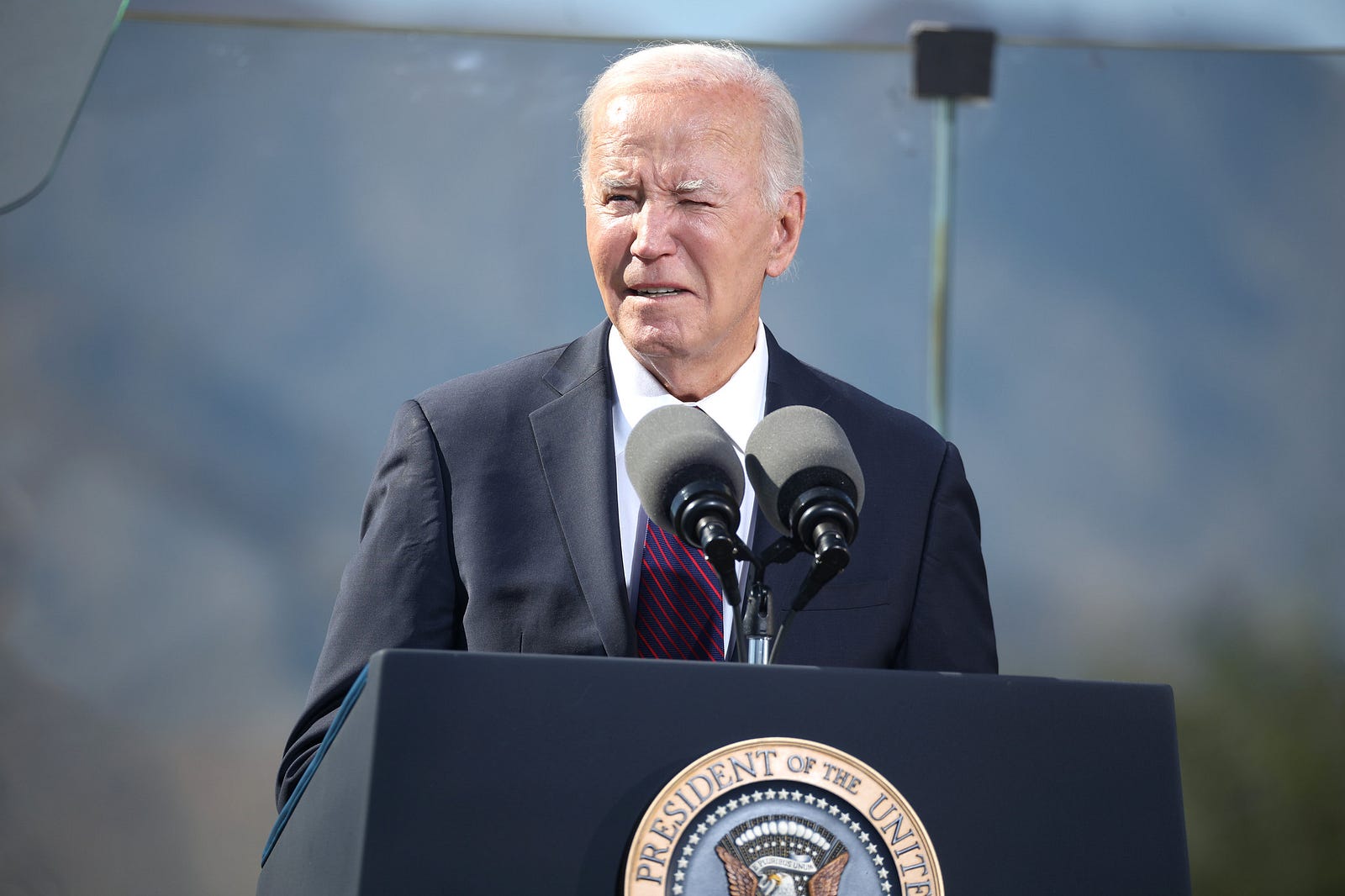
The Democratic Party’s biggest donors have not stopped spending money. They have stopped giving it to the Democratic National Committee.
That distinction helps explain the disjointed financial picture emerging before the midterms. Democratic Senate candidates such as Jon Ossoff and James Talarico are raising impressive sums, while the DNC has just $16.3 million in cash against $18.5 million in debts and loans. The Republican National Committee, meanwhile, is sitting on approximately $128.5 million without debt.
Democratic donors are not on strike against Democratic candidates.
They are withholding money from a party establishment they no longer trust.
Ken Martin, the DNC chairman, has become the immediate target of donor anger. His fundraising has disappointed, his election autopsy was incomplete, and reports of internal disorder have hardly inspired confidence. But Martin did not create the original breach of trust.
He inherited it from the people who protected Joe Biden.
For years, Biden’s closest aides restricted his unscripted appearances, carefully managed his schedule and insulated him from officials who might bring unwelcome information. Democratic leaders and friendly media figures dismissed questions about his acuity as partisan attacks or misleading “cheap fakes.” Donors were asked to finance his reelection campaign while the party insisted he remained fully capable of serving another four years.
Then came that disasterous June 2024 debate.
Americans watched Biden constantly lose his train of thought, struggle to complete answers and confirm in 90 minutes what they had been repeatedly told — for years! — not to believe. Within weeks, the same party that had protected him from a meaningful primary concluded that he could not remain its nominee.
That deserves to be called the Biden cover-up.
It may also have affected more than the campaign. Before the disastrous Afghanistan withdrawal, Rep. Adam Smith — the Democratic chairman of the House Armed Services Committee — tried to reach Biden directly. Smith believed the administration was badly underestimating the Afghan government’s fragility and wanted to warn the president.
He could not get Biden on the telephone.
“I was begging them to set expectations low,” Smith later said. After Kabul fell and Smith criticized the administration’s lack of a “clear-eyed view,” Secretary of State Antony Blinken called to object. Biden eventually called Smith to apologize — the only telephone conversation Smith had with Biden during his four-year presidency.
The same investigation reported that a national-security official said Biden had “good days and bad days” and that a particular matter would have to wait because it was a bad day. Cabinet interactions were comparatively infrequent and often scripted.
None of this proves that aides secretly ordered the Afghanistan withdrawal. Biden had long favored leaving and appears to have made the central decision himself. But it raises an unavoidable question: Was the president capable of testing his own assumptions, and did his aides prevent contrary information from reaching him?
Democrats still have not provided a satisfactory answer. Nor have they adequately explained who authorized every presidential action, how the autopen was controlled, when Biden’s deterioration became apparent or why voters and donors were kept in the dark.
Instead, the party hurriedly transferred the nomination to Kamala Harris, raised more than $1 billion for her abbreviated campaign and lost. Its subsequent autopsy avoided a full accounting of Biden’s decision to run again and the conduct of those who concealed his condition.
Now party leaders seem surprised that megadonors will fund individual candidates but will not hand unrestricted checks to the DNC.
Those donors understand that elections can be lost. What they resent is being bilked. They were asked to invest in a campaign while the people requesting their money possessed information about the candidate’s condition that they refused to acknowledge publicly. When the deception became impossible to sustain, donors were asked for even more money to rescue the party from an emergency its own leaders had created.
Martin cannot repair the DNC merely by hosting better fundraisers. The party must confess what happened, identify who participated and establish safeguards to prevent it from happening again. That means a complete accounting of Biden’s condition, his decision-making process and the White House chain of authority — not another carefully edited autopsy designed to avoid embarrassing powerful Democrats.
The Democratic Party wants its donors to move on. But trust cannot be restored without truth, and there has been no apology worthy of the offense.
Until Democrats acknowledge the Biden cover-up, its ghost will continue haunting the DNC — and “Do Not Contribute” will remain more than a joke. It will be the donor class’s verdict.
(Contributing writer, Brooke Bell)