Francesca Hong polling was another swing and a miss. Is polling dead?
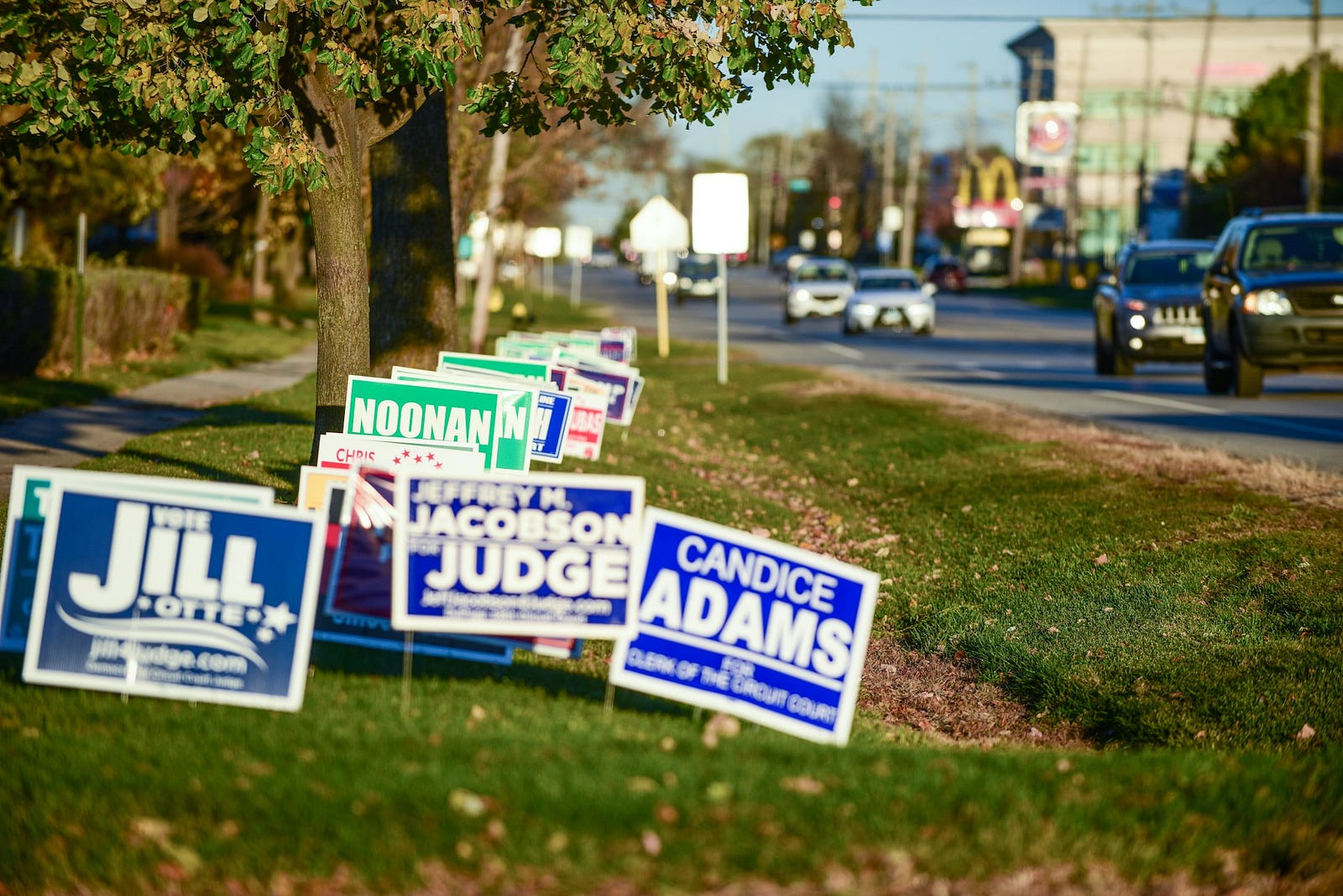
Francesca Hong’s Wisconsin upset produced another spectacular polling failure — and exposed a deeper problem that no statistical adjustment can completely solve.
Francesca Hong was supposed to win Wisconsin’s Democratic gubernatorial primary. Poll after poll showed the democratic socialist state representative comfortably ahead. Some gave her double-digit advantages. One put her 23 points ahead of Milwaukee County Executive David Crowley.
Then the voters arrived.
Crowley won with approximately 39.8% of the vote, edging Hong’s 39.4%. The result was close, but the polling failure was not. Marquette University’s final survey showed Hong at 40% after including voters leaning toward a candidate — almost exactly where she finished. But it placed Crowley at just 12%.
Pollsters have emphasized that they measured Hong’s support accurately. Fair enough, but identifying the loser’s percentage while underestimating the winner by nearly 28 points is not a successful poll. It is another swing and a miss in an industry running out of explanations.
The Wisconsin race was unusually volatile. Crowley entered late after another candidate withdrew. Many Democrats remained undecided. Moderate voters apparently converged around Crowley during the final days, perhaps concluding that he was the candidate best positioned to stop Hong. Marquette completed its interviews roughly two weeks before Election Day, an eternity in such a fluid contest. Its Democratic-primary sample contained only 407 respondents and carried a 6.6-point margin of error.
Those are reasonable qualifications. They do not make the poll useful as a forecast.
Then the story became stranger. The mysterious organization behind the Hong-plus-23 result, Median Strategies, admitted that its poll never existed. It had fabricated both the Wisconsin survey and another showing Los Angeles Mayor Karen Bass comfortably ahead of Nithya Raman.
Median called its operation a “short-term social experiment” examining how unverified polling enters the political bloodstream. That self-serving explanation remains unverified. Its anonymous organizers want us to accept their account of their motives after demonstrating that nothing they published can be trusted.
The hoax worked better in Los Angeles, where the Bass campaign celebrated the favorable result before deleting its post. Wisconsin campaigns and major news organizations appear largely to have ignored Median. Still, the operation demonstrated how easily someone can imitate the surface features of polling. Invent 560 respondents, calculate a mathematically plausible margin of error, publish some demographic tables and wait for partisan actors to repeat the result.
Legitimate polling is obviously different from manufactured data. Marquette publishes its questionnaire, sampling process and weighting procedures. Median invented respondents. One committed an honest methodological failure; the other committed a deception.
But honest polling has a deeper problem.
Polls are described as samples of “American adults,” “registered voters” or “likely voters.” In reality, they are samples of American adults, registered voters or likely voters who are willing to be polled. That is a critically different population.
Response rates can fall into the low single digits. The people who answer tend to be more educated, politically attentive, institutionally trusting and civically engaged. During the Trump era, Republicans — and particularly distrustful, noncollege and working-class conservatives — have become less likely to participate.
Pollsters attempt to compensate through weighting. If too few rural, noncollege Republican men answer, the few who do can be assigned greater statistical weight. That corrects the visible demographic imbalance, but it assumes the cooperative Republican resembles those who refused.
What if he does not?
The conservative willing to spend 20 minutes answering questions from Reuters, CNN or a university may be more moderate, more trusting and less intensely pro-Trump than the ten conservatives who deleted the text or hung up. Multiplying his answers by ten does not recover their missing opinions. It merely magnifies the opinion of the unusual person willing to answer.
Pollsters cannot weight for a characteristic they cannot observe. “Distrusts pollsters and will never answer one” is not a Census category.
That helps explain how two legitimate national polls could produce radically different results at almost the same moment. Reuters/Ipsos recently measured Trump at 33% approval among adults. Rasmussen put him at 44% among likely voters. Reuters used an address-recruited online panel; Rasmussen used automated telephone interviews and an online panel. Reuters weighted by demographics, party identification and recalled 2024 vote. Rasmussen applied its proprietary likely-voter model.
The 11-point gulf dwarfs either poll’s reported margin of error. Polling averages place Trump around 39%, suggesting Reuters is unusually low and Rasmussen unusually high. Yet Reuters confidently announced the “lowest approval of his presidency,” as though 33% were a national head count rather than the output of one model.
Polling is not dead. It can still identify broad trends, reveal issue priorities and show movement when multiple independent surveys agree. High-quality polls remain preferable to anecdotes, social-media impressions or campaign spin.
What is dying is polling’s claim to decimal-point authority.
A poll should be treated as an estimate built upon uncertain assumptions, not a laboratory measurement. Its advertised margin of error covers ordinary sampling variation; it does not fully capture nonresponse, bad turnout models, late voter movement, dishonest answers, flawed weighting or entire groups refusing participation.
Journalists should report ranges and averages, disclose pollsters’ historical house effects and stop turning two-point fluctuations into dramatic news. Campaigns should stop promoting unfamiliar surveys merely because the results flatter them. Readers should ask who answered, who refused and what assumptions transformed those respondents into “the American people.”
The Wisconsin result did not prove that polls tell us nothing. It proved, once again, that they tell us considerably less than pollsters — and the political press — would like us to believe.
(Contributing writer, Brooke Bell)