Prime Minister Benjamin Netanyahu has become a convenient excuse for the collapse of progressive support for Israel. But the political divide runs much deeper than one person.
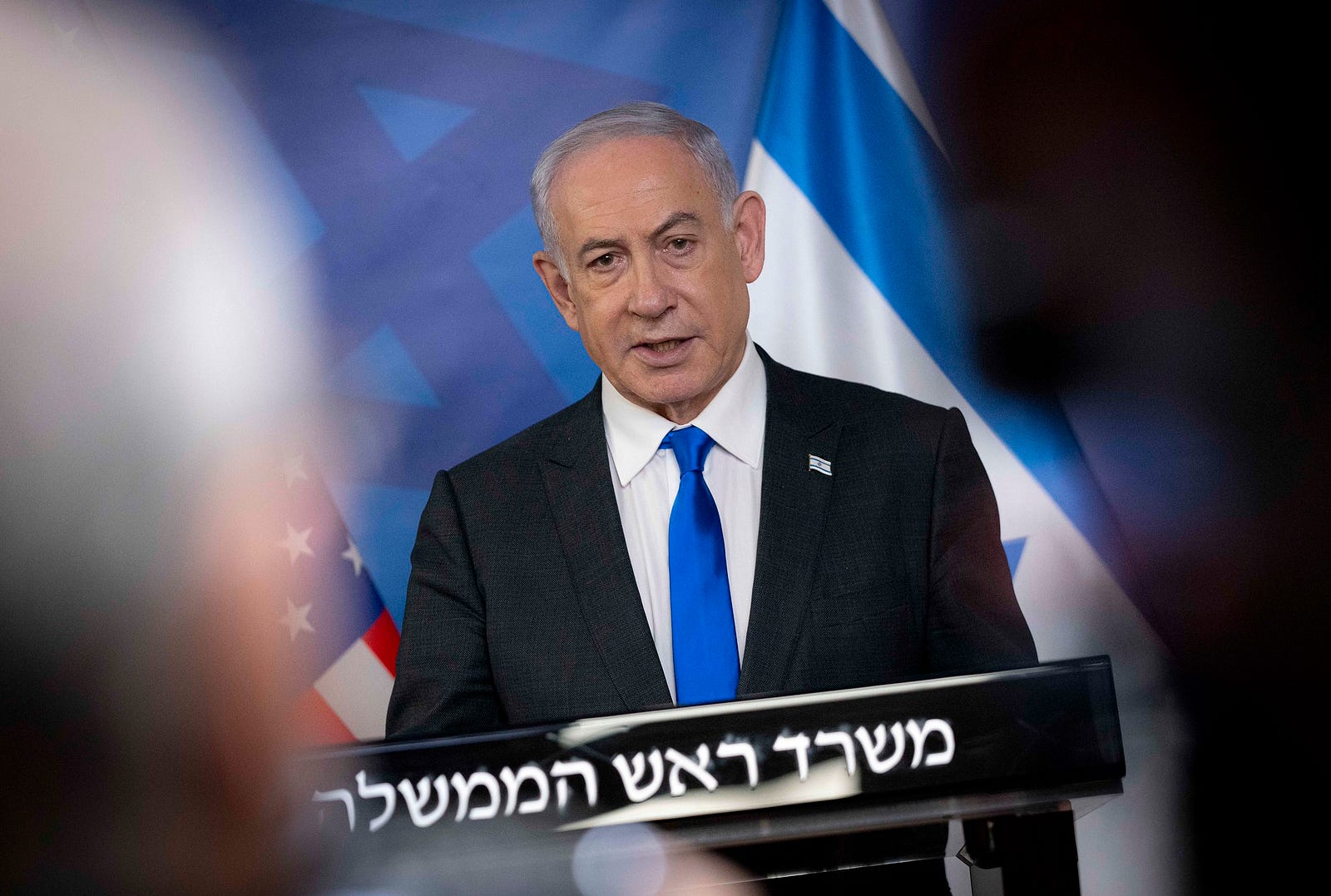
For much of the Democratic Party, Benjamin Netanyahu has become the all-purpose explanation for everything that has gone wrong in the U.S.-Israel relationship.
Israel is isolated because of Netanyahu. The peace process is dead because of Netanyahu. Younger Democrats are turning against Israel because of Netanyahu. Remove him, restrain him or replace him, and perhaps the old relationship can be rebuilt.
That is a politically convenient argument. It is also too simple.
Netanyahu is unquestionably a consequential leader. As Israel’s longest-serving prime minister, he has shaped the country’s politics, security doctrine and relationship with the United States. He has frequently clashed with Democratic administrations, opposed the establishment of a Palestinian state under present conditions and governed with coalition partners considerably further to his right.
But Netanyahu did not create the Israeli electorate. He did not invent Israeli skepticism toward the peace process. Nor did he single-handedly move Israel to the right on questions of security, territory and Palestinian sovereignty.
That shift grew out of experience.
Terrible experience.
Israelis were told that diplomacy would produce peace. Instead, the Oslo years brought negotiations alongside waves of suicide bombings. They were told that territorial withdrawal could reduce conflict. Israel withdrew from southern Lebanon, only to watch Hezbollah build a formidable military presence along its border. Israel removed its soldiers and settlements from Gaza, after which Hamas seized power, launched thousands of rockets and ultimately carried out the October 7 massacre.
American liberals often interpret this history as evidence that occupation, military force and the absence of a viable Palestinian state have perpetuated the conflict and left Israel less secure.
Many Israelis have drawn the opposite conclusion. They believe concessions, withdrawals and international assurances created openings that Israel’s enemies used to arm themselves and attack.
That disagreement is now at the center of the widening divide between Israel and the Democratic Party.
It cannot be explained away by presenting Netanyahu as a uniquely destructive figure who dragged an otherwise peace-minded country into permanent conflict. Netanyahu did not manufacture Israeli distrust of the peace process. His political durability reflects, at least in part, his recognition of concerns that many foreign observers repeatedly discounted.
One of the most important realities facing Democrats is that even many Israelis who oppose Netanyahu do not share the American left’s assumptions about peace.
They may object to his domestic agenda, his coalition management, his approach to Israel’s institutions or his handling of particular decisions during the war. They may prefer a different prime minister, a broader coalition or a less confrontational relationship with Washington.
But that does not mean they favor the creation of a Palestinian state. It does not mean they trust the Palestinian Authority to control terrorism. It does not mean they believe another territorial withdrawal would produce peace rather than a larger and more dangerous version of Gaza.
A post-Netanyahu Israel would still be Israel after October 7.
That is the part of the argument many Democrats prefer not to confront.
Blaming Netanyahu allows the party to preserve a familiar moral framework. Democrats can say they remain committed to Israel while insisting that their real problem is its current government. They can separate the country from its elected leadership and imagine that a change at the top would restore the old bipartisan consensus.
The distinction is sometimes legitimate. No democratic nation should be permanently reduced to one leader.
But it becomes misleading when criticism of Netanyahu substitutes for engagement with Israeli public opinion.
Israel’s political center has changed. Its traditional peace camp has weakened, and the central assumptions of the Oslo era no longer command broad confidence. Netanyahu did not impose that change on a passive public. Israeli voters lived through failed negotiations, terrorism, rocket attacks, regional disorder and the collapse of security arrangements they had been assured would protect them.
Many concluded that the dangers of territorial concessions without enforceable security guarantees were greater than Western diplomats acknowledged.
Democrats may disagree with that conclusion. But they cannot maintain a durable relationship with Israel by pretending Israelis reached it only because Netanyahu frightened, manipulated or radicalized them.
The Democratic Party has also changed.
Older Democrats frequently understood Israel as a small democracy surrounded by hostile forces and connected to the United States by shared interests and values. Many younger progressives are more likely to understand the conflict primarily through the language of occupation, civilian casualties, disparities of power and Palestinian dispossession.
Even under a more conciliatory Israeli prime minister, the fundamental disagreements would remain.
Would Democrats support Israeli military action when defeating an enemy embedded among civilians produces terrible images and casualties? Would they accept continuing Israeli security control over strategically important territory? Would they defer Palestinian statehood until Israel had a credible partner capable of governing, preventing terrorism and honoring an agreement? Would they continue supporting Israel when influential parts of the Democratic coalition regarded its basic security policies as inherently illegitimate?
Those are the real questions.
The future relationship will require honesty from both sides.
Israeli leaders must recognize that American support cannot be taken for granted and that rhetoric, coalition decisions and conditions in Gaza and the West Bank affect the alliance. Democratic leaders must recognize that Israeli security concerns are not inventions created by Netanyahu to preserve his political career.
A more serious Democratic approach would begin by acknowledging that Israel’s rightward turn is not merely a personality cult. It is a political response rooted in events Israelis experienced as repeated failures of diplomacy, deterrence and international guarantees.
That does not place Netanyahu beyond criticism. Like every elected leader, he is accountable for the decisions of his governments. But evaluating those decisions is different from making him the universal explanation for a conflict, a regional transformation and an American political realignment that extend far beyond him.
Demonizing Netanyahu has too often become a substitute for understanding the country he leads.
The Democratic Party will not repair its relationship with Israel by waiting for one man to leave office. It will have to decide whether it can remain a dependable ally of an Israeli public that is more skeptical of diplomacy, more focused on security and less willing to gamble its survival on promises from Palestinian leaders or the international community.
Netanyahu symbolizes this divide because he has articulated the conclusions many Israelis reached before October 7 — and believe were tragically confirmed by it.
He did not create the rupture. Nor will the rupture disappear when his time in office ends.
(Contributing writer, Brooke Bell)