The media has ignored the story, but the arson suspect in the California Palisades fire of 2025 went on trial this week.
As the Pacific Palisades arson suspect goes on trial, the question is not only whether prosecutors can prove he started the deadly fire. It is whether America is becoming dangerously comfortable with turning private rage into political violence.
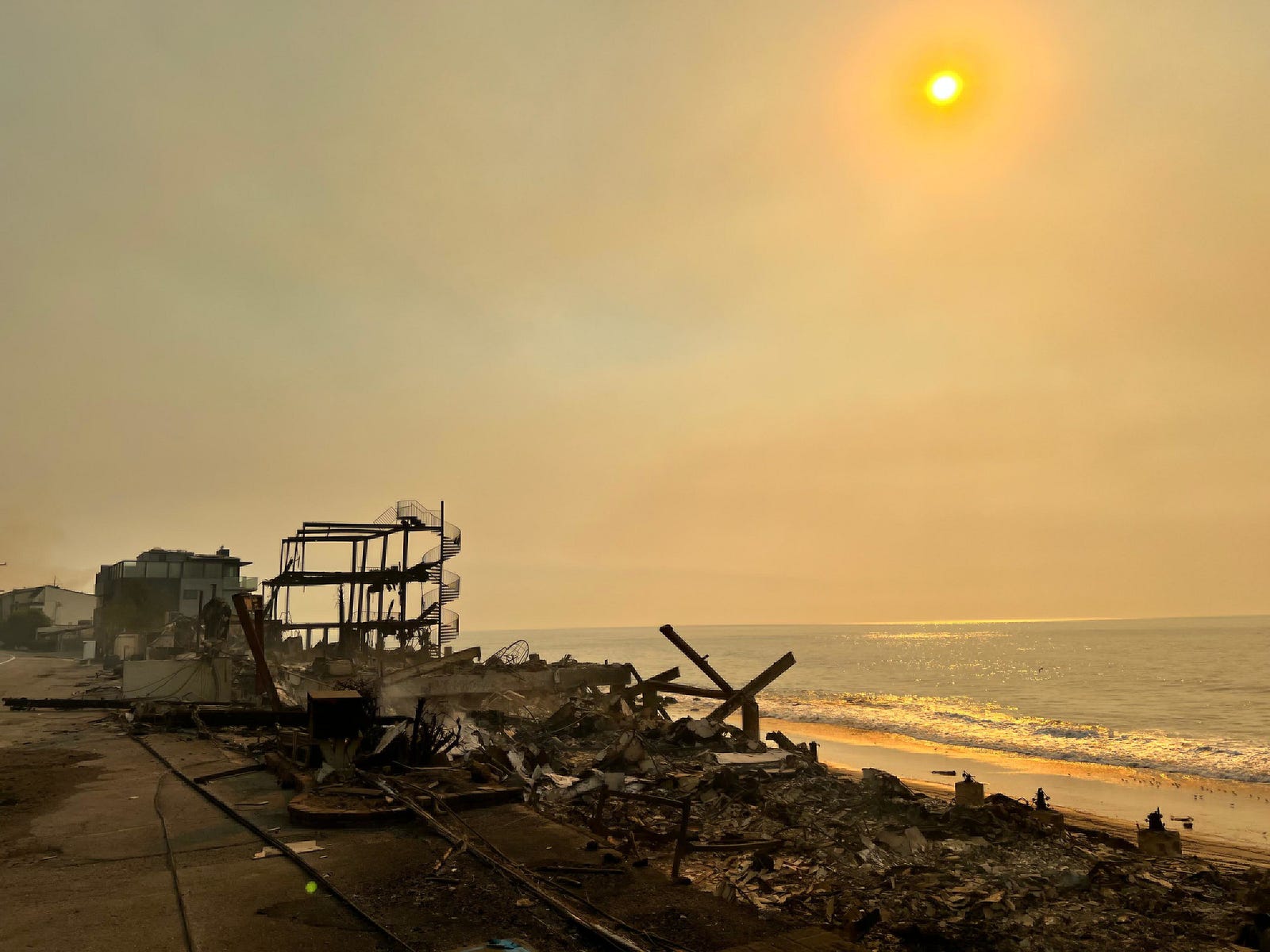
Jonathan Rinderknecht has pleaded not guilty to charges tied to the Palisades Fire, which killed 12 people and destroyed thousands of structures after tearing through Pacific Palisades and Malibu. Prosecutors allege he started a smaller fire on New Year’s Day 2025 that continued smoldering underground before flaring back up days later under catastrophic wind conditions.
That is the legal case. The cultural case is darker.
According to prosecutors, Rinderknecht was not merely angry or unstable. They say he had become fixated on Luigi Mangione, the man accused of murdering UnitedHealthcare CEO Brian Thompson. They allege Rinderknecht searched phrases including “free Luigi Mangione,” “let’s take down all the billionaires,” and “reddit let’s kill all the billionaires.”
They also allege that when investigators asked why someone might commit arson in Pacific Palisades, he described resentment toward wealthy people and said ordinary people were “basically being enslaved” by them.
These are allegations. Rinderknecht is entitled to a defense, and prosecutors still have to prove their case.
But if the government’s account is accurate, this was not just a man with a lighter. It was a man swimming in the same poisonous cultural water that has turned Mangione from a murder suspect into a folk hero in some corners of the internet and college campuses.
That should alarm everyone.
The so-called “Free Luigi” phenomenon is not normal political anger. It is not health-care reform. It is not populism. It is not even old-fashioned class resentment. It is the moral laundering of violence through grievance. A man is accused of assassinating a health-care executive, and instead of universal horror, some responded with legal defense donations, fan edits, merchandise, memes, and court followers treating him less like a defendant than a revolutionary pinup.
Now prosecutors in the Palisades case are alleging that another man absorbed that atmosphere and applied it to one of the wealthiest neighborhoods in Los Angeles.
A society should pay attention when slogans like “eat the rich” and “kill all billionaires” move from edgy internet shorthand into the emotional vocabulary of criminal defendants.
The strange thing is how little national attention this case has received.
The Palisades Fire was one of the most destructive disasters in Los Angeles history. It devastated neighborhoods, upended the mayor’s race, exposed deep anger over recovery delays, and became part of a larger debate about whether Los Angeles is capable of basic governance. For months, the dominant national story was climate change: dry conditions, wind, fuel, heat, and the growing danger of the urban-wildland interface.
Climate and fuel conditions can make fires spread faster and burn hotter. Bu California’s wildfire problem is overwhelmingly human-ignited. The ignition source is not a minor footnote. It is central to understanding what happened.
So why did the arson case not break through?
Because it complicates the preferred story. “Climate change destroyed Pacific Palisades” is simple, familiar, and politically useful. “A man allegedly radicalized by anti-rich grievance culture started a smaller fire that later became a deadly catastrophe, while city leaders now face questions about preparedness, response, and rebuilding” is much harder to fit into the approved script.
It also forces uncomfortable questions about the culture. We have spent years pretending that violent rhetoric is mostly theatrical. “Eat the rich” is just a joke. “Globalize the intifada” is just a slogan. “All cops are murderers” is just activism. “Kill all billionaires” is just internet venting.
Until it isn’t.
The future of political violence may not look like organized cells with manifestos and uniforms. It may look like lonely, angry, unstable people scrolling through a culture that tells them their rage is justice, their targets are oppressors, and destruction is a form of moral clarity.
That is what makes the Mangione phenomenon so dangerous. It gives permission. Not explicit instruction, necessarily. Not a command. But an atmosphere. A moral mood. A story in which the victim becomes a symbol, the accused becomes a hero, and violence becomes understandable because the target is said to represent a hated system.
This is how political violence escalates. First comes the grievance. Then comes the slogan. Then comes the meme. Then comes the fan base. Then comes the copycat, the unstable loner, the person looking for meaning, the person who wants his private misery transformed into public righteousness.
The Palisades trial may determine whether Rinderknecht committed the crimes prosecutors allege. But the larger verdict is already coming into view.
America has a radicalization problem, and it is not confined to one ideology, one platform, or one foreign influence campaign. It is the collapse of the basic moral consensus that murder, arson, and terror are not redeemed by politics.
If prosecutors are right, the Palisades Fire was not only a natural disaster made worse by wind and dry fuel. It was a warning flare.
(Contributing writer, Brooke Bell)