America cannot stop artificial intelligence, and it should not try. The future will belong to the country that develops AI most rapidly while creating laws strong enough to direct its benefits toward the public good.
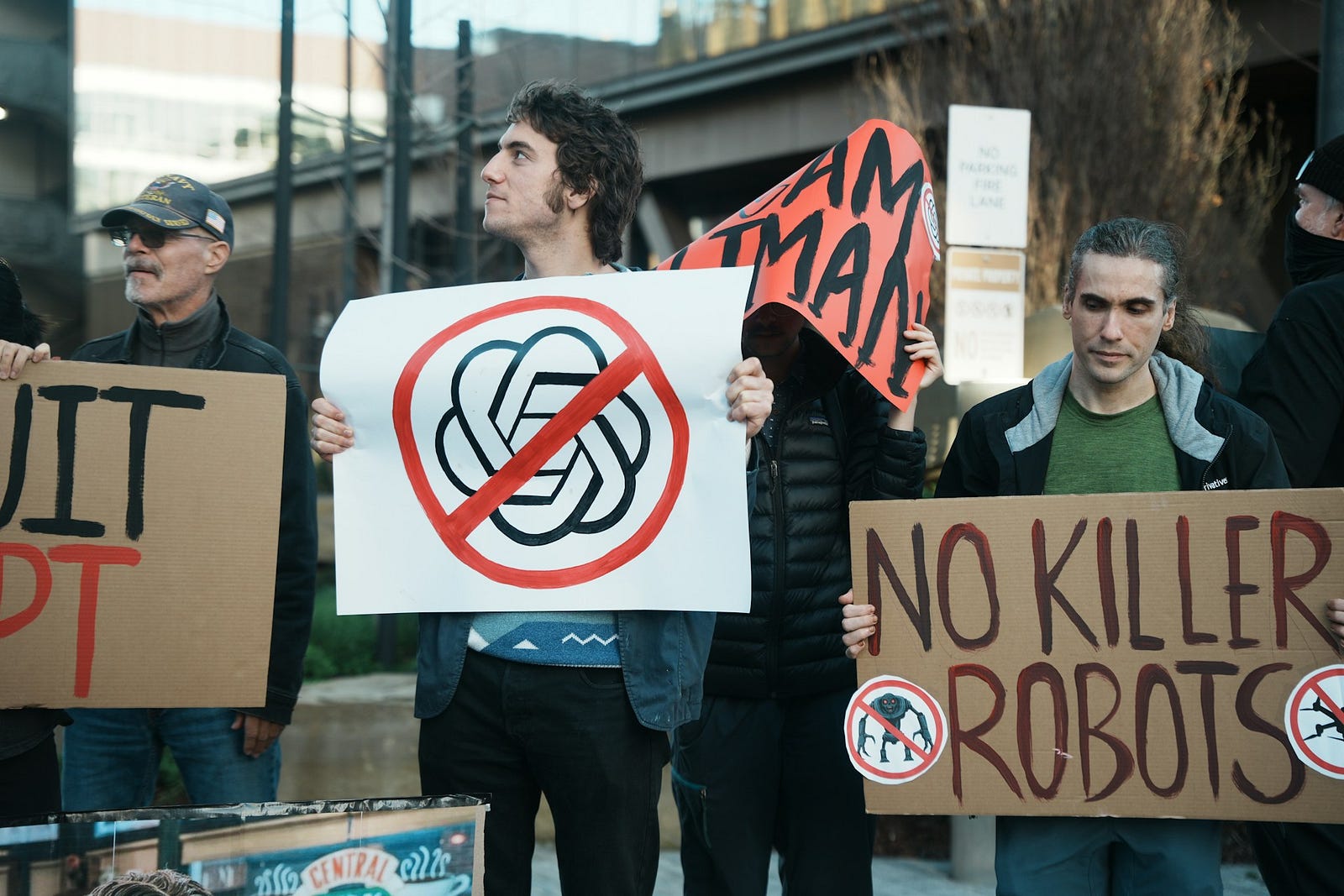
America cannot stop artificial intelligence.
No one can.
And we shouldn’t try.
The future will belong to the country that develops AI most rapidly while creating laws strong enough to direct its benefits toward the public good.
The only thing standing between human beings and many of our worst impulses is good law.
That is why the United States has child labor laws, workplace safety standards, traffic regulations, electrical codes and penalties for fraud. Factories, automobiles and electricity are not inherently immoral. But human beings sometimes cut corners, exploit the vulnerable and transfer the costs of their decisions to someone else.
Artificial intelligence does not change human nature. It magnifies human power.
That distinction should be at the center of America’s AI debate. The question is not whether AI should be allowed to exist. It already exists, and no act of Congress can uninvent it. Nor can the United States prevent other countries from developing it. China will not suspend its ambitions while American lawmakers hold hearings. Russia, Iran and other adversaries will not observe an American moratorium.
America cannot stop AI, and it should not try.
The task is to ensure that the laws governing AI are as innovative, adaptable and ambitious as the technology itself. The future will belong not to the country that fears AI least, nor to the country that regulates it most, but to the country that builds it fastest while governing it best for the greatest benefit to all.
This is not the first time a new technology has produced economic anxiety.
Steam power displaced established trades. Railroads transformed towns and entire industries. Electricity reorganized factories and household life. Automobiles threatened carriage makers, blacksmiths and streetcar systems. The internet eliminated some occupations while creating industries that had previously been unimaginable.
Each transformation produced real disruption. Yet refusing to participate would not have protected the country. Imagine if the United States had placed a moratorium on internet infrastructure because lawmakers worried about pornography, fraud, misinformation, privacy and job losses. Those problems were real, but the internet would still have developed somewhere.
Silicon Valley might now be in China.
The same danger exists with AI. A national pause would not stop progress. It would merely determine who benefits from it. It could surrender technological leadership, military advantages, economic growth and global influence to governments that do not share America’s commitment to liberty, individual rights or democratic accountability.
Opponents of AI data centers often speak as though stopping construction would protect Americans from technological change. In reality, it would drive investment, expertise and infrastructure elsewhere. Our competitors would continue building while the United States voluntarily restricted itself.
The better response is to build the data centers and the energy system needed to power them — while writing laws that ensure ordinary Americans are not exploited in the process.
Large technology companies should pay for the additional electricity generation, substations, transmission lines and water infrastructure their facilities require. Families should not see their utility bills rise because a trillion-dollar corporation negotiated a favorable deal with local officials.
Host communities should receive guaranteed benefits for schools, roads, emergency services and workforce development. Promises of future prosperity should be written into enforceable agreements, not left in corporate press releases.
AI companies must also remain legally responsible for the systems they create. An executive should not be permitted to escape accountability by claiming that an algorithm made the decision. Companies should face clear liability for fraud, unlawful discrimination, privacy violations, reckless deployment and foreseeable harm.
Children deserve special protections. Consumers should know when they are interacting with an artificial system. People should have meaningful rights over their personal data and likenesses. High-stakes decisions involving criminal justice, medical care, employment, credit and military force should retain identifiable human responsibility.
At the same time, regulation must not become a weapon for freezing innovation or protecting established corporations from new competitors. Rules should establish clear standards and predictable liability — not force every start-up to spend years seeking permission from bureaucracies that barely understand the technology.
Good regulation should be firm, understandable and adaptable. Congress should set enduring principles while allowing technical standards to evolve as systems improve. Laws should be reviewed regularly so that outdated rules do not survive merely because government moves more slowly than technology.
AI itself can help lawmakers perform this work. It can compare proposed statutes, identify loopholes and contradictions, analyze how regulations have worked elsewhere and model unintended economic consequences. It can help legislators write clearer bills and help the public understand what those bills actually do.
But AI cannot decide what America values. It cannot determine how much risk a free society should tolerate or which rights must remain inviolable. Those judgments belong to human beings who can be questioned, challenged, elected and removed.
Progress cannot be stopped. But it can be shaped.
America’s choice is not between artificial intelligence and a world without it. The choice is between leading the AI era under democratic law or allowing that era to be shaped by authoritarian competitors and unaccountable institutions.
We should build boldly, regulate intelligently and refuse to surrender the future out of fear.
(Contributing writer, Brooke Bell)