The UN doesn't need member states to pay their dues. It needs new leadership and a new way forward.
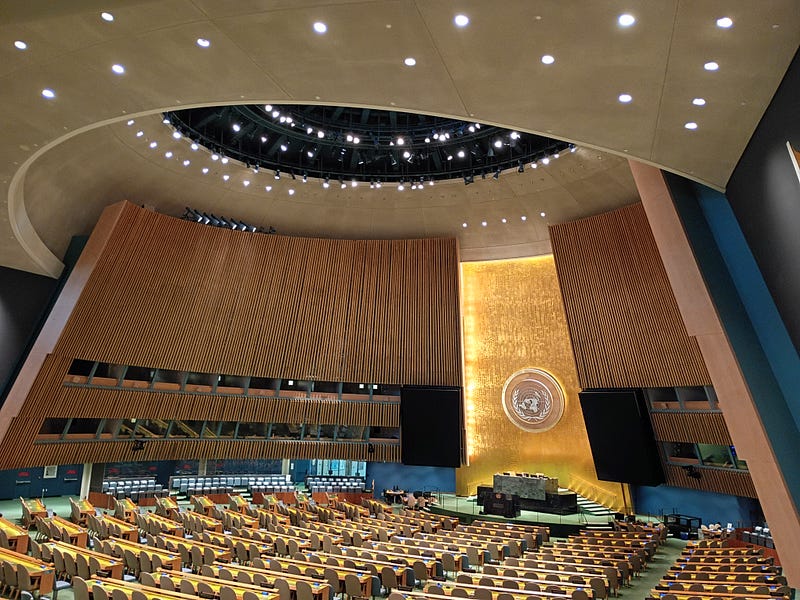
The United Nations is facing what its own leadership has described as an “imminent financial collapse.”
“Either all member states honour their obligations to pay in full and on time — or member states must fundamentally overhaul our financial rules to prevent an imminent financial collapse,” warned United Nations head Antonio Guterres this week.
“The practical reality is stark: unless collections drastically improve, we cannot fully execute the 2026 program budget approved in December,” Guterres wrote in a letter to member nations. “Worse still, based on historical trends, regular budget cash could run out by July.”
The problem, we are being told by UN’s governing body, is unpaid dues and delayed contributions. That explanation is technically accurate — and completely insufficient.
It isn’t the whole truth. The real problem is mismanagement at the highest level.
Why aren’t member nations paying dues on time?
Member states are not paying because they no longer believe the institution is competently led, strategically coherent, or capable of reforming itself.
It is a financial vote of no-confidence.
For years, the U.N. expanded its ambitions while steadily losing the authority needed to sustain them. Its mandates widened and multiplied, fracturing into insensibility. Its declarations grew more sweeping. Its moral claims became grander. At the same time, its ability to enforce norms, discipline bad actors, or impose consequences quietly evaporated.
This imbalance was not accidental. It was tolerated — even encouraged — by leadership that treated legitimacy as something inherent rather than earned. The organization continued to act as though symbolic authority alone could substitute for leverage, enforcement, or accountability.
Obviouslt, it cannot.
The result is an institution where power and responsibility are dangerously misaligned. Countries that contribute the most money often have little meaningful control over outcomes. Countries that contribute little face no consequences for obstruction, politicization, or chronic noncompliance. Decisions are made by bodies insulated from financial responsibility, while those expected to fund the system are asked to do so on faith.
This faith, predictably, appears to have run out.
This is what mismanagement looks like at the institutional level: expanding commitments without securing buy-in, refusing to prioritize or sunset failing initiatives, and mistaking process for progress. When credibility erodes, compliance follows — not out of malice, but out of rationality.
Why should member nations continue to send good money after bad? It’s the sunk cost fallacy.
The sunk cost fallacy — the tendency to keep investing in a failing system simply because so much has already been invested in it. Instead of asking whether something is still working, decision-makers focus on how much time, money, and prestige have already been spent — and conclude that walking away would “waste” those past investments. In reality, those costs are already gone. Continuing to fund a broken system to avoid admitting failure only deepens the damage.
In any other organization, this pattern would trigger leadership change. A board would intervene. Donors would walk. Executives would be replaced. The U.N., shielded by tradition and the fear of destabilizing a global institution, has instead drifted — assuming that no one would dare let it fail.
That assumption now looks badly mistaken.
Withholding funds is not an act of vandalism against multilateralism. It is a signal — a blunt one — that the current model is broken. An institution that cannot discipline itself cannot expect discipline from its members. An institution that cannot align authority with responsibility cannot sustain itself indefinitely.
This moment requires more than emergency appeals or rhetorical recommitments to global cooperation. It requires new leadership willing to confront uncomfortable truths: that the U.N. has overextended itself, lost the confidence of its funders, and failed to adapt to a harsher geopolitical reality.
Reform will be painful. It will mean fewer mandates, clearer priorities, and real consequences. But the alternative is worse: an organization that survives only as a forum for speeches, while its operational relevance slowly disappears.
Institutions rarely collapse all at once. They hollow out first. The U.N. is dangerously close to that point — and only serious leadership change can pull it back.
(Contributing writer, Brooke Bell)