Summer 2026: Consumer confidence is driving travel.
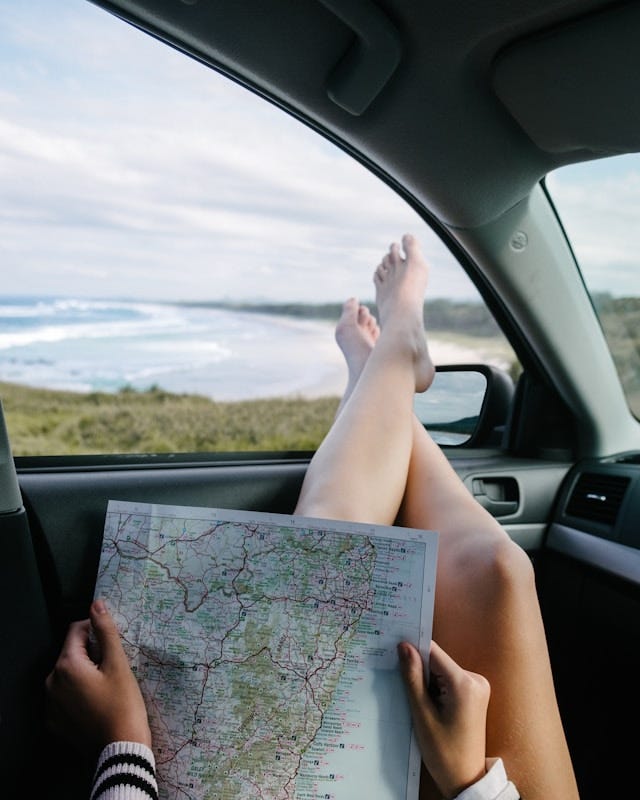
It’s Summer 2026 and the great American Road Trip is alive and well. In fact, it may be one of the clearest signs that Americans are not nearly as pessimistic about the economy as the headlines often suggest.
But it’s true: Gas is expensive. Hotels are expensive. Airfare is expensive. Restaurants are expensive. And yet Americans are still packing the car, loading the cooler, making playlists, booking beach houses, visiting national parks, driving to see family, and turning long weekends into mini-vacations. That is not the behavior of a country that has given up. It is the behavior of a country that may be irritated by inflation but still believes normal life is worth preserving.
AAA projected a record 72.2 million Americans would travel at least 50 miles from home over the 2026 Fourth of July holiday period, with 61.4 million traveling by car. That means roughly 85 percent of holiday travelers were expected to drive. Even with high fuel prices, the car remains king. For families especially, the math is obvious: four plane tickets, baggage fees, rental cars, airport delays, and hotel costs can turn a simple vacation into a financial event. Driving gives Americans control. It lets them trim costs, change plans, bring the dog, pack snacks, and stop when they want.
That has always been part of the American story. The road trip is not a fad. It is built into the geography, culture, and economy of the country. America is vast, decentralized, and full of regional destinations. The Bureau of Transportation Statistics found that Americans take about 2.6 billion long-distance trips a year, and almost nine out of ten are by personal vehicle. Long before cheap flights, app-based booking, or remote work, Americans were a driving people.
The historical trend is remarkably resilient. Vehicle miles traveled in the United States have risen over the long term since the 1970s, interrupted mostly by major shocks: the oil crises of 1974 and 1979, the 2008 financial crisis, and the pandemic collapse. But after each disruption, Americans got back on the road. Even shocks that flatten driving rarely kill the habit. The road trip keeps returning because it answers something deeper than convenience. It is freedom, family, affordability, and escape all at once.
From an economic standpoint, that is a positive signal. Travel is discretionary. People who are truly terrified about their finances usually do not spend money on gas, hotels, theme parks, restaurants, lake rentals, beach trips, and roadside attractions. U.S. Travel’s 2026 forecast expects inflation-adjusted travel spending to grow by 1 percent this year, supported by resilient domestic demand. That is modest growth, not a boom. But modest growth is still growth.
The Conference Board’s June consumer confidence reading also fits this picture. Its Consumer Confidence Index inched up to 91.2, with expectations improving even as consumers remained cautious about jobs and prices. That is not euphoric confidence. It is cautious confidence. Americans are not necessarily saying the economy is wonderful. They are saying they still have enough faith — in their jobs, income, credit cards, savings, or sheer determination — to go somewhere this summer.
But the good news comes with a warning. The road trip boom is not evenly shared. Deloitte found that only 45 percent of Americans planned a summer vacation involving paid lodging in 2026, the lowest share in six years. Costs are keeping many people home. Those who are traveling expect to spend more, and the summer traveler pool is increasingly tilted toward higher-income households.
That means the road trip is both a positive economic signal and a sign of consumer adaptation. Americans are still traveling, but many are trading down. They are driving instead of flying, staying closer to home, visiting relatives, shortening trips, choosing regional destinations, and looking for vacations that feel special without becoming financially reckless. The road trip survives inflation because it is flexible. It can be a luxury experience, but it can also be a budget strategy.
That is why the Great American Road Trip remains such a revealing economic indicator. It says Americans are squeezed, but not broken. They are price-conscious, but not immobilized. They may complain about the cost of gas while filling the tank anyway. They may grumble about hotel rates while booking two nights instead of four. They may skip Europe, but they are still driving to the beach, the lake, the mountains, the grandparents’ house, the ballpark, the campground, or the national park.
In summer 2026, the road is telling a very American story. Consumers are cautious, but still moving. Confidence is not roaring back, but it is rising. And the open road — stubborn, practical, democratic, and free — remains one of the country’s most reliable escape hatches.
The Great American Road Trip is alive and well because Americans are alive and well: restless, resilient, annoyed by prices, but unwilling to stay home.
(Contributing writer, Brooke Bell)