Secretary of State Marco Rubio is in the Persian Gulf. Can he save the Iran deal?
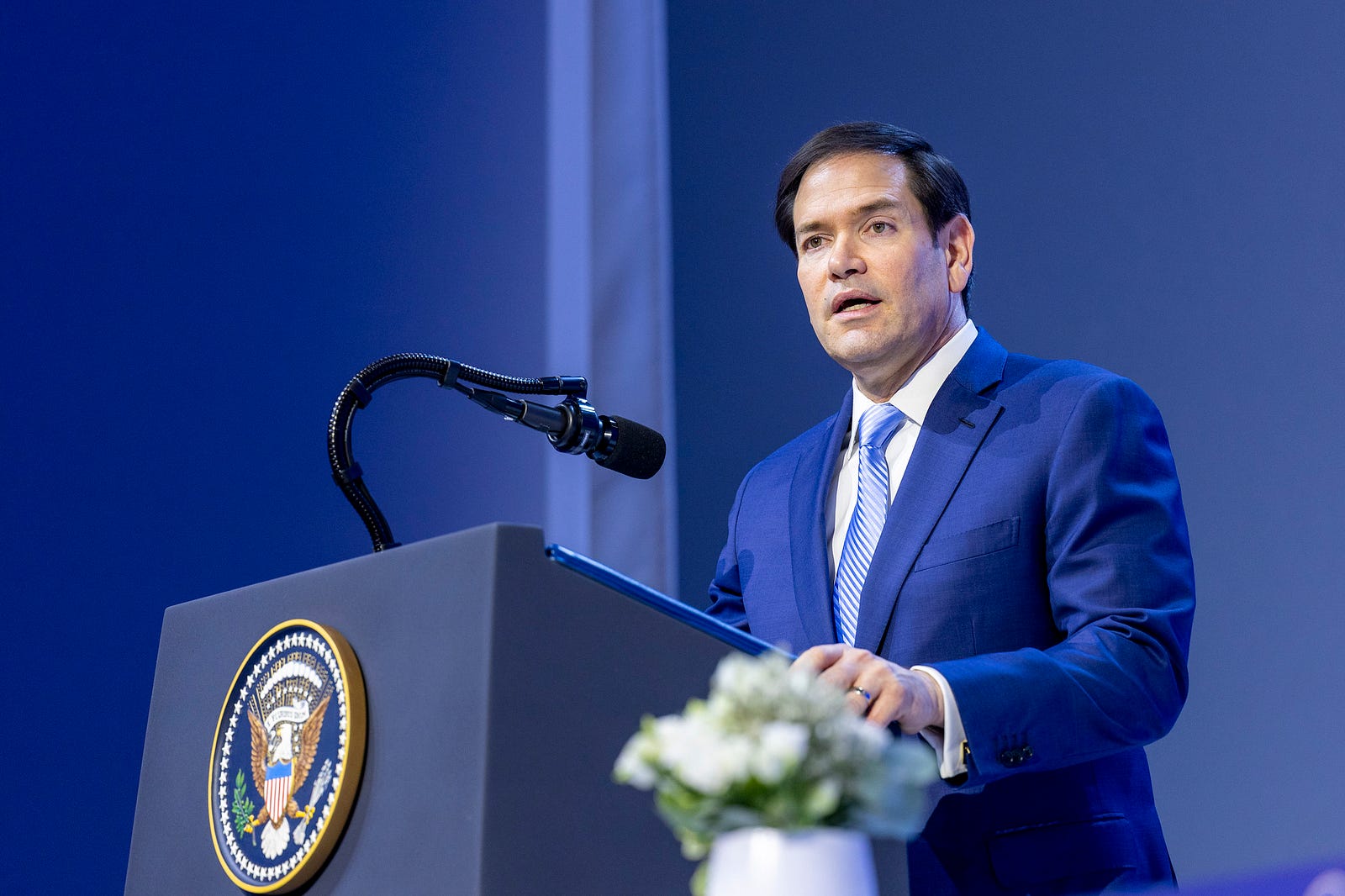
Secretary of State Marco Rubio is in the Persian Gulf with one of the hardest diplomatic assignments in the world: reassure America’s Gulf allies that the United States is not about to reward the same Iranian regime that just spent months attacking them.
It is a delicate mission. President Donald Trump has backed a preliminary agreement with Iran that could end the four-month U.S.-Israeli war and open the way to a broader settlement.
The deal includes sanctions relief and a proposed $300 billion investment fund for Iran, though the details remain conditional and unfinished. That is exactly why Gulf leaders are nervous. They wanted the war to end, but they do not want Iran to emerge from it with cash, breathing room and enough military capacity to threaten them again.
That is where Rubio comes in.
Rubio is not a soft-power diplomat who built his career on flattering hostile regimes. He is a long-time Iran hawk, a strong supporter of Israel, a former member of the Senate Foreign Relations Committee and a former vice chairman of the Senate Intelligence Committee. His worldview was shaped by a deep suspicion of authoritarian regimes, from Cuba and Venezuela to China and Iran. He has spent years arguing that dictatorships do not moderate because they are indulged. They moderate, if they do at all, because pressure changes their calculation.
That background gives him unusual value in the Gulf. If a more accommodation-minded diplomat arrived in Abu Dhabi, Kuwait City or Manama and said, “Trust us,” Gulf leaders might hear wishful thinking. When Rubio says it, they know he understands the danger.
The Gulf states have good reason to be skeptical. They host strategic U.S. military facilities. They were drawn into the war because Iran chose to strike beyond Israel and beyond U.S. forces. Kuwait and the UAE were hit. Saudi Arabia was targeted through Iranian-backed networks. The Strait of Hormuz remains open but fragile. Shipping is still disrupted. Insurance costs are high. Iran’s missiles, drones and proxy cells are not theoretical threats to these countries. They are recent memories.
So the question for Rubio is not whether he can make Gulf leaders like the deal. They may not. The question is whether he can persuade them that the deal is not appeasement dressed up as diplomacy.
To do that, Rubio has to draw a hard line around three issues.
First, the money cannot come first. Any reconstruction fund or investment vehicle for Iran has to depend on Iranian compliance, not promises. Tehran cannot be allowed to take the economic upside of peace while quietly rebuilding the military infrastructure that made war possible in the first place. If the fund is truly conditional, Rubio should say so plainly and repeatedly.
Second, the nuclear file cannot be separated from enforcement. Iran’s highly enriched uranium is still the central danger. Inspections must be real, intrusive and verifiable. The United States cannot accept vague language, delayed access or Iranian claims that sensitive sites are off limits until sanctions are lifted. That would invert the entire bargain. Compliance has to precede relief.
Third, missiles and proxies cannot be treated as side issues forever. Gulf states are less worried about Iran’s press releases than about Iranian drones, ballistic missiles and militias embedded across the region. A deal that handles uranium but ignores missiles and proxy warfare may postpone one crisis while setting up the next.
Rubio’s challenge, of course, is made harder by domestic politics.
Some Republicans already see the agreement as a concession to Tehran. Democrats, for their own reasons, are watching for any sign of chaos inside the administration. Rubio also has to navigate the fact that Vice President JD Vance has been highly visible in the Iran talks, creating inevitable speculation about influence, succession politics and who really owns the deal.
But those political complications may be less important than they look. And as Thomas Jefferson once said, “you can accomplish a great deal if you don’t care who gets the credit.”
Trump is the president. Vance may be the negotiator. Rubio is the closer.
It is strategic. If Gulf allies believe Washington is drifting toward Iran, they will hedge. They will make their own side deals, buy more weapons, deepen ties with other powers and doubt American guarantees. If they believe the United States is testing diplomacy from a position of strength, they may give Trump’s deal time to work.
Rubio cannot save the Iran deal by himself. Iran has to comply. Inspectors have to get access. The money has to remain conditional. Gulf security concerns have to be integrated into the next phase, not politely acknowledged and then ignored.
But Rubio can save the political architecture around the deal. He can tell Gulf leaders, credibly, that the United States knows who Iran is. He can defend diplomacy without sounding naïve. He can reassure Israel and the Gulf that peace does not require forgetting what Tehran did.
That may be the only way this agreement survives. Not as a grand gesture of trust, but as a hard-nosed test of whether Iran has finally been weakened enough to accept limits it once rejected.
If Rubio can make that case, he will not merely be rescuing Trump’s Iran deal. He will be proving why experience, credibility and seriousness still matter in American diplomacy.
(Contributing writer, Brooke Bell)