Throwing an explosive device into a crowd of protestors isn't an act of defiance or rebellion. Don't dress up violence with high-minded ideals.
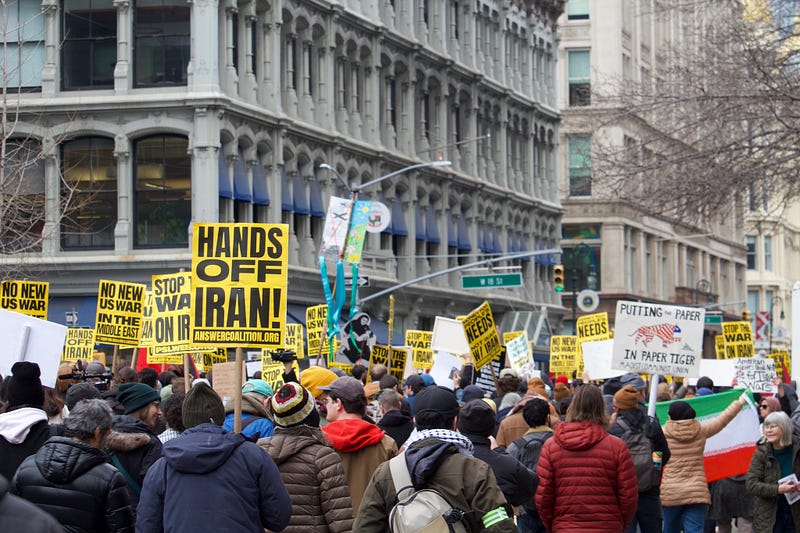
By now, the facts are clear enough to say this without hedging: throwing an explosive device into a crowd of people at a political protest is not courage. It is not resistance. It is not righteous anger.
It is not some glamorous act of anti-establishment rebellion for morally enlightened people. It is terrorism-adjacent criminal violence, and in this case federal prosecutors say it was exactly that: an ISIS-inspired bombing attempt outside Gracie Mansion in New York, where two Pennsylvania men are accused of bringing improvised explosive devices containing TATP, screws, and bolts to a chaotic protest scene. Police intercepted the smoking devices before anyone was killed.
We got lucky.
This time.
Publicly, this New York case is not being treated as part of an Iran-directed sleeper network. According to news reports, the suspects told police they were inspired by Islamic State, and New York police said they had not seen evidence linking the attack to the war with Iran. That distinction matters. But it does not make the moment less dangerous. It makes it more revealing.
We are living in a country where the threat picture is widening, the public mood is coarsening, and more people seem willing to flirt with the idea that political violence is understandable so long as the target is someone they despise.
New York City Mayor Zohran Mamdani got this part exactly right. In his statement after the attack, he said, “Violence at a protest is never acceptable.” He was right. Full stop. You do not have to agree with the anti-Muslim rally outside Gracie Mansion to understand that people in America have a right to assemble, speak, and be answered by counterprotesters without somebody lobbing an explosive into the crowd.
In fact, that is the whole point. The right to protest means nothing if it exists only for people we like. Mamdani also said the attempt to use an explosive device was “reprehensible and the antithesis of who we are.” That is exactly the language we need more of right now: moral clarity.
Not excuses.
Because this attack did not happen in a vacuum. We are ten days into a U.S. war against Iran, and federal threat reporting has already warned that Iran and its proxies probably pose a persistent threat of targeted attacks in the homeland, even if a large-scale physical attack is considered unlikely.
ABC reported today that a federal alert reviewed by the network described encrypted transmissions likely originating in Iran that may function as an operational signal for covert assets abroad, though the alert also said the contents remain unknown and there is no specific location-based threat. In other words, the warnings are real, even if not every fear has been confirmed. This is exactly the kind of environment in which a civilized country should be lowering the temperature, not normalizing violence as just another form of political expression.
Instead, too many people now seem weirdly eager to romanticize violence when it flatters their own resentments. We saw it in the grotesque online fandom that sprang up around Luigi Mangione after the murder of UnitedHealthcare executive Brian Thompson. Donations poured into his legal defense fund with messages supporting him and even celebrating the crime. Progressives wear tee-shirts emblazoned with his image. Etsy sells prayer candles with his face. There are arguments online over whether he was some kind of “hero.” That should have horrified everyone. Instead, for a not-small number of people, assassination became content, grievance theater, and meme fodder.
We saw it again after Charlie Kirk’s murder. The Pentagon moved to discipline service members over posts cheering his death. That is what happens when a culture stops treating murder as a moral line and starts treating it as a tribal Rorschach test. Some people celebrate. Others threaten retaliation. Everyone gets more radicalized. The country gets uglier by the hour.
And yes, the polling picture is getting grimmer by the day. Gallup found that while most Americans still say political violence is never okay, 16% say it is sometimes okay, with young adults more likely to say so. Harvard’s fall 2025 youth poll found that 39% of young Americans considered political violence acceptable under at least one circumstance. Pew found broad agreement across the political spectrum that politically motivated violence is increasing.
So when people say, “Oh, come on, it’s just online talk,” I don’t buy it anymore. Online talk is where moral permission gets granted. Online talk is where killers get turned into symbols. Online talk is where people rehearse the argument that violence is regrettable but understandable, ugly but necessary, criminal but somehow noble.
Enough.
This is the United States of America. We protest. We argue. We practice religion freely. We run for office. We champion causes. We use our words. We vote. We organize. We persuade. We lose and come back and try again. What we do not do — at least not if we intend to remain a free people — is decide that explosives, bullets, or beatings are just politics by other means.
Throwing a bomb into a crowd is not dissent. It is an assault on the entire American idea. And this would be a very good moment for the country to say so with one voice.
(Contributing writer, Brooke Bell)