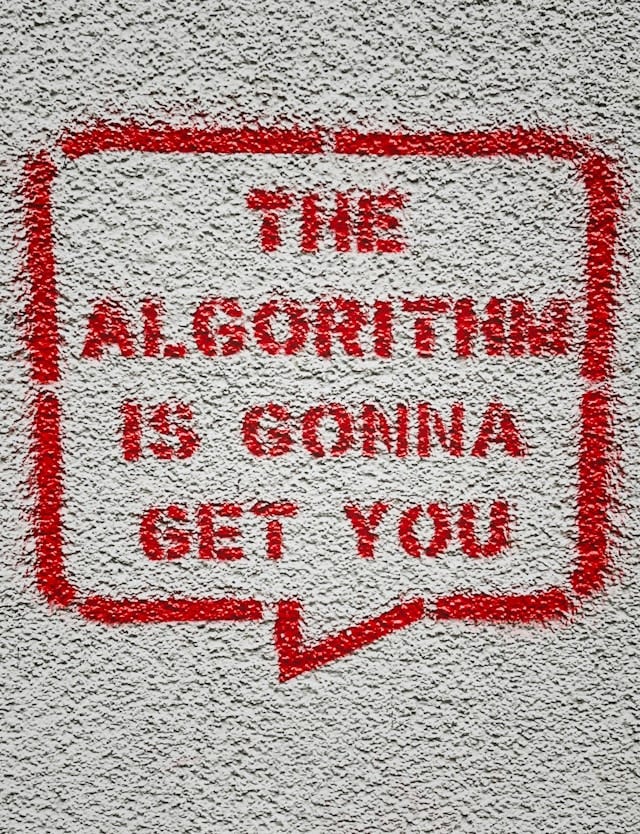
Why do fringe politicians keep winning when their policies keep losing? Because media algorithms have transformed the political landscape.
It didn’t happen overnight.
And it didn’t happen all at once.
So many of the things that transform every aspect of our daily lives start out that way, don’t they?
But sometime during the last two decades, gradually then all at once, the political landscape of the United States, and probably many other nations after a fashion, changed forever.
The old rules are falling away. New rules are being formed. Imperfectly. By fits and starts. Not completely, but more and more.
The old rules of politics — avoid controversy, cultivate a stolid public reputation and personae, don’t express every personal opinion — are failing.
The new political rules seem to favor the controversial. Nazi tattoo? That’s no longer a deal-breaking in Maine. Openly advocating for genocide against a U.S. ally? Not a career-ender in New York.
It mades sense to espouse only popular policy positions, from the historical perspective of Democracy in the United States of America. After all, we are a representative democracy.
Every Congressional Representative and Senator, every governor and state committeeman. Every president. In a representative democracy, our elected officials go to Washington from their home states, cities, towns, and districts to represent the will of the people who voted them in.
So staking out the most popular political positions makes complete sense — you need broad appeal to get elected. The most popular policy positions, however, are also by definition least controversial.
The electorate may think we like our elected officials uncontroversial. We may say we want them to be moderate, bipartisan, mainstream, representative of the most democratically popular, widely held beliefs and policy positions.
But the algorithms of our social media sites, online news/entertainment media companies, and our clickbait-loving habits say otherwise.
Online, the more controversial the comment, the better.
Liking, following, sharing posts: These online activities are all upside and payoff and no downside. No consequences. No money or time commitment required.
It’s easy to like the post of a politician espousing a fringe political belief.
“Here’s my unpopular opinion,” and “Change my mind,” and “Don’t cancel me, but…” are all popular memes for a reason.
So when a self-described Democratic Socialist of America posts on social media that they want free college for everyone, or student loan forgiveness, or universal health care, it’s the easiest thing in the world for users to like and share it.
Do the social media users want their taxes to go up in order to pay for these programs IRL?
No.
But the old guard politicians didn’t operate like this.
For a politician two decades ago, the idea of voicing (on camera!) an unpopular or — heaven forfend! — controversial, fringe opinion would have been unthinkable.
Democratic Party presidential hopeful Howard Dean had his campaign derailed by an overenthusiastic, undignifed shout during a political rally. Former President Barack Obama, always the savvy politician during his long political career, only admitted in 2012 that he supported gay marriage, long after the subject had drifted into the comfortable mainstream of widespread acceptance and popularity.
Did Obama support gay marriage, in his heart, long before then? Probably. But politicians don’t get elected to share their personal convictions and convert the unwashed masses.
They get elected to represent their constituents.
Fast forward to 2024, and America watched a dozen Democratic Party presidential hopefuls pledge, during a live televised debate, to use taxpayer funds to pay for gender reassignment surgeries in prisons.
Did they have their reasons? Personal convictions? Of course.
But that is a fringe policy position shared by the barest sliver of registered voters in the United States. Making such a pledge might not have hurt them politically with members of their own party, but it did hurt them electorally with mainstream voters.
There is a place where fringe political theories and policy platforms play very well, however.
On social media.
For online news/entertainment media companies churning out clickbait on an hourly basis.
So when statisticians and old school politicians and experienced analysts look at far left, fringe candidates like New York City Mayor Zohran Mamdani, Rep. Alexandria Ocasio-Cortez, Chicago Mayor Brandon Johnson, Sen. Bernie Sanders, and wonder “Why do they keep winning?” the answer may be the algorithms.
The policy positions of self-described “Democratic Socialists” haven’t changed. Sen. Bernie Sanders, for his part, is still hawking the same unworkable policies that failed fifty years ago, in what should have been the final time, when the Iron Curtain fell.
There is nowhere in the United States, or anywhere else in the world, to which socialists of any description can point and say “There! There, our policies are working, everyone is happy and prosperous. They love us.”
From Chicago to Seattle, from Venezuela to New York: Nowhere.
Most modern socialists are missing a major pillar with their “eat the rich” philosophy. Sure, you can tax the rich and the middle class into oblivion…but you have to build a wall.
To keep everyone in.
Even politicians who should know better, and have been playing the game much longer, are starting to get in on the new action. The Democratic Party proper is having so much trouble raising money they’ve had to hire Billy Crystal.
Everyone is still mad at George Clooney, apparently.
But making controversial statements to the press is big business in online political fundraising. The further from the mainstream, the more fear-mongering, the more extreme the content, the better…as far as the algorithm and billions of dollars in advertising dollars is concerned.
As far as the country, maybe not so much.
(Contributing writer, Brooke Bell)