Trump has argued for years that the United States carries too much of the world's security burden. As Hormuz chokes, he may see a chance to force the issue.
For years, U.S. President Donald Trump has returned to the same basic complaint: America pays, patrols, protects the world, and projects power, while much of the developed world enjoys the benefits and bears little of the cost. You do not have to agree with all of Trump’s rhetoric to recognize that this idea sits near the center of his foreign policy.
Now, with the Strait of Hormuz still badly constrained even after a ceasefire with Iran, it is worth asking whether he sees this crisis as more than a naval problem. Trump may see it as an opening. Not just a chance to reopen a shipping lane, but a chance to reveal who really depends on American hard power, and who is actually willing to help sustain it.
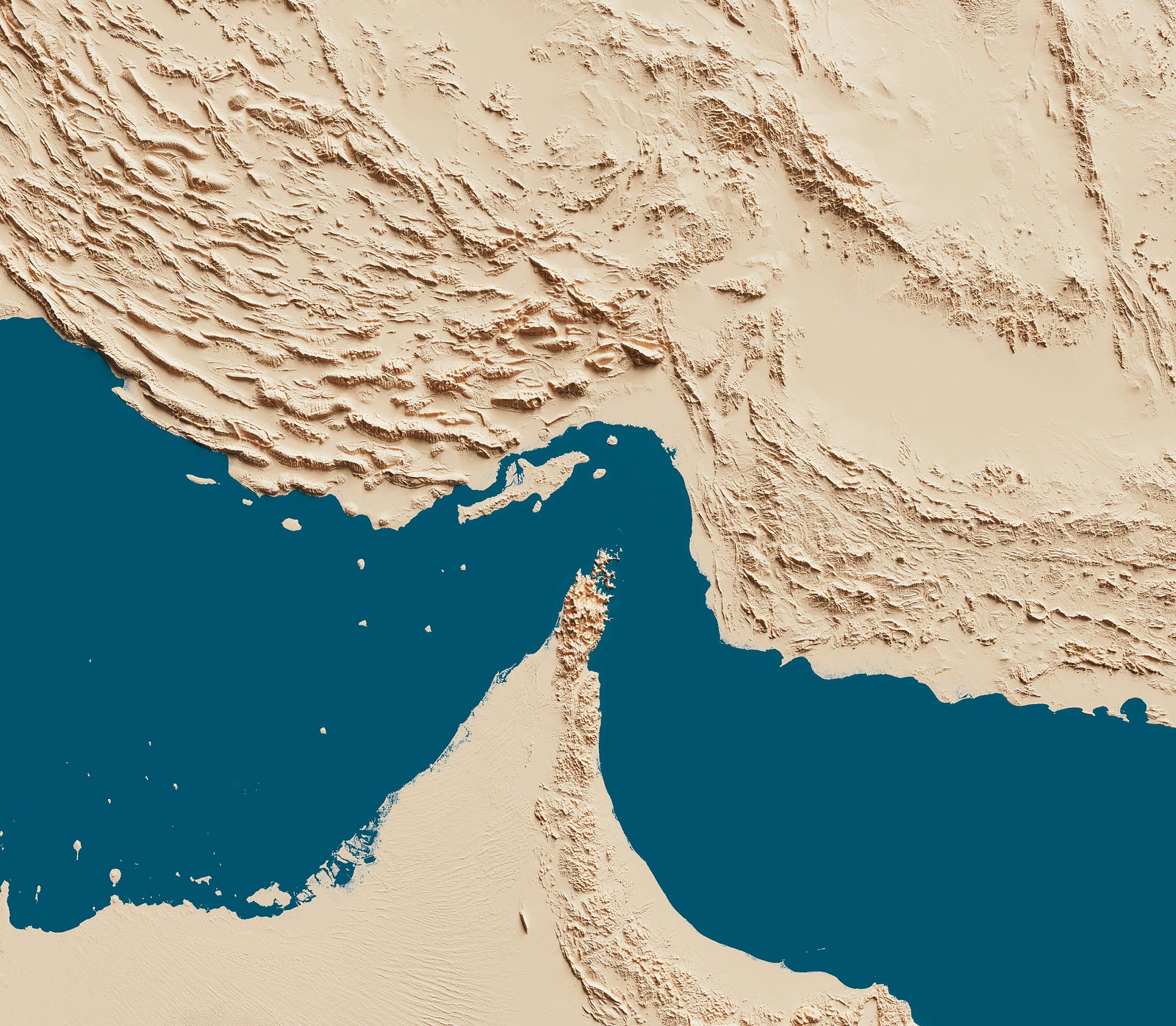
That is what makes Hormuz so important. This is not some abstract dispute for think tank panels and cable-news chatter. In 2024 into early 2025, the strait carried more than a quarter of the world’s seaborne oil trade and about a fifth of global oil and petroleum-product consumption.
Traffic is still running far below normal, with only a limited number of vessels getting through each day. This is one of those rare moments when geography cuts through fashionable political language. Countries can talk endlessly about values, climate goals, multilateralism, and a post-American world order. But when one narrow waterway is seized by a hostile power, the old question comes roaring back: who is actually able, and willing, to keep the world economy moving?
Trump, whatever his flaws, understands this perfectly. As such, he may be trying to turn a shipping crisis into a strategic audit — an audit of dependency. An audit of whether Europe, Britain, and other allied economies really mean it when they talk about shared security. An audit of whether wealthy countries that benefit from open sea lanes are prepared to do more than issue statements about the rules-based order while quietly waiting for the U.S. Navy to do the hard part.
Recent news coverage suggests NATO Secretary General Mark Rutte has been pressing allies for concrete commitments on Hormuz within days, while Britain has been helping organize a wider coalition effort and other European governments have been scrambling to decide what they are actually willing to contribute.
And Trump is not just grumbling from the sidelines. Coverage has suggested he has grown so frustrated with the allied response that he has even discussed pulling some U.S. troops from Europe, though no formal move has been announced. That does not prove some flawless master plan. But it does suggest that he is willing to link one theater to another. In plain English, the message seems to be this: if you expect the United States to underwrite your security in Europe, then do not vanish when a global chokepoint starts burning in the Gulf.
There is a cold logic to it: The United States is not immune to a Hormuz shock, but it is less directly exposed than many of the countries now watching events there with alarm.
U.S. energy data show America imported only about 0.4 to 0.5 million barrels per day through Hormuz, equal to roughly 7 percent of U.S. crude and condensate imports and about 2 percent of total petroleum liquids consumption. That does not mean Americans are safe from higher gas prices — far from it. Obviously.
Oil is globally priced, and disruptions travel fast. But it does mean Washington has more room to play hardball than countries whose economies are more vulnerable to a prolonged squeeze. A president looking to force a reckoning would notice that right away.
The one caution is that this argument should not be framed too narrowly as a morality play about Europe alone. Most of the crude and LNG moving through Hormuz goes to Asia, not the European Union. China, India, Japan, and South Korea are among the biggest destination markets. So the real question is larger than Europe. Can Trump use this chokepoint crisis to force the whole network of beneficiaries, allies, partners, and aligned economies to start behaving like shareholders instead of dependents? That is the stronger version of the argument. It is less emotional, more strategic, and probably closer to the truth.
The question is not simply whether ships start moving again. Eventually, they will. The deeper question is whether the old system returns unchanged: America patrolling, America paying, America taking the risks, while allies enjoy the insurance and criticize the insurer.
Trump seems to understand that a chokepoint crisis like this can do more than raise oil prices. It can strip away illusions. It can force governments to show whether they really believe in burden-sharing, or merely in American rescue. If that is what he is trying to do, then Hormuz is not just a shipping story. It is a test. And for some of America’s allies, it may prove to be a very uncomfortable one.
(Contributing writer, Brooke Bell)