And the longer the conflict drags on, the more the picture changes.
For nearly two weeks, the public story of this war has been simple: Iran got hit hard, its leadership was decapitated, its military machinery was badly damaged, and the regime was finally staring at the end.
“They are pretty much at the end of the line,” U.S. President Donald Trump told the press last night, speaking of the conflict in Iran. “It doesn’t mean we’re going to end it immediately, but they’ve got no navy. They’ve got no air force… They have no systems of control.”
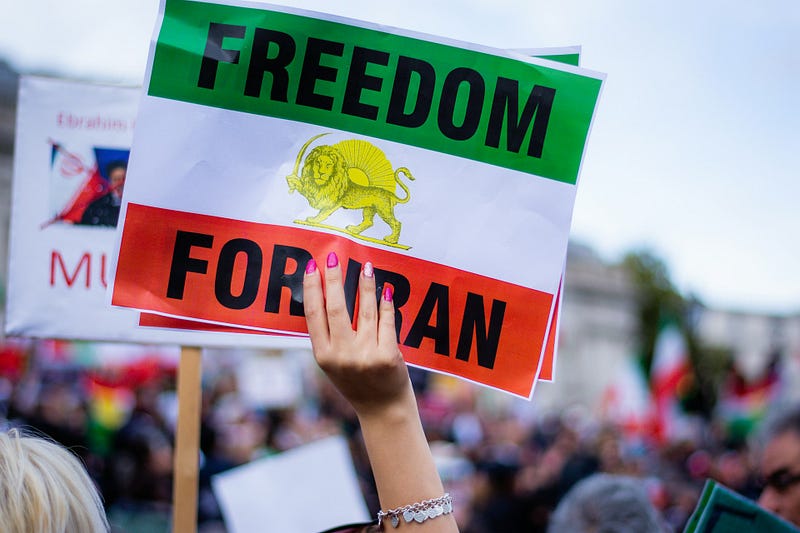
Benjamin Netanyahu pushed the argument even further, openly telling the people of Iran that this was a “once in a lifetime opportunity” to remove the regime, promising that Israel and the United States were creating the conditions for Iranians to “grasp your destiny.”
“People of Iran,” began Prime Minister of Israel Benjamin Netanyahu in a social media post on March 10, 2026. “We are waging a historic war for liberty. This is a once in a lifetime opportunity for you to remove the Ayatollah regime and gain your freedom. Together with the United States, we are hitting the Tyrants of Teheran harder than ever.”
“The Ayatollah is no more, and I know you don’t want him replaced with another tyrant,” PM Netanyahu wrote. “So you must act. We are creating the conditions for you to do so. We have hit countless Regime targets. We have taken out thousands of IRGC thugs and hundreds of their missile launchers.”
“We are focused on regime targets and are doing our best not to harm the People of Iran,” vowed Netanyahu. “We are your ally. Your best ally. We fully respect your sovereignty, culture and heritage. You asked for help and help has arrived. We will continue to hit with growing force the tyrants who terrorized you for decades. The Ayatollahs and their henchmen are on the run — but those cowards have nowhere to hide. In the coming days we will create the conditions for you to grasp your destiny.”
“Your dreams will become a reality,” he promised. “When the time is right, and that time is fast approaching, we will pass the torch to you.”
Netanyahu isn’t the only one making such a suggestion.
“Only Iranians can bring down regime, but they need outside help,” advised Lazar Berman for The Times of Israel this morning. “Foreign minister says nuclear, ballistic missile programs are ‘badly damaged,’ US wants to win as much as Israel does; ‘We were under no illusions Hezbollah threat had disappeared.”
There is also the question of just who exactly in currently in charge of the Iranian regime. Since the death of Ali Khamenei soon after the conflict began, it hasn’t been clear. The most recent reports suggest that Khamenei’s son, Mojtaba Khamenei, has replaced his late father as leader.
Problem is, no one has seen the younger Khamenei since the conflict began. Reports that he sustained serious injuries early in the strikes abound.
“Where Is Ayatollah?” wondered the Daily Mail this week. “Who is running Iran while ‘supreme leader’ is too injured to show his face? Khamenei son says ‘vengeance is the priority’ in statement read out for him amid claim he is ‘in a coma and lost a leg.’”
“The written statement attributed to Mojtaba Khamenei, 56, was read out by a news anchor on state TV this afternoon,” reported the Daily Mail. “He himself did not appear on national TV. His absence will only fuel rumours that he is either too ill to record a reading of his statement or died in an airstrike.”
“The Iranian leader, who took over from his father Ayatollah Ali Khamenei following his assassination on February 28, added that while he believes in maintaining a friendship with Iran’s Gulf neighbours, attacks on US bases in the region will continue,” the outlet added.
And Iran is certainly not out.
“US Intel Warns Iran Regime ‘Not in Danger’ of Collapse Even After Top Leaders Wiped Out in Strikes,” reported David Gilmour for Reuters today. “Sources familiar with the reports told Reuters on Thursday that the clerical regime remains cohesive and in authority across the country even after the killing of Supreme Leader Ayatollah Ali Khamenei in the opening hours of the conflict on February 28.”
“The main thing is we have to win this thing,” President Trump said on Thursday. “Win it quickly, but win it! And there are many people, I’m just watching some of the news, most people say it’s already been won, it’s just a question of when do we stop.”
“We don’t want to let it re-grow,” Trump added. “And ideally, we’d like to see somebody in there that knows what they’re doing. In other words, they can build a country. Now, one other thing. We can hit sections of Tehran and other places that, if you do it, it’ll be almost impossible for them to rebuild their country. And we don’t want that.”
“But we can hit electric,” threatened Trump. “We could take apart their electric capacity within one hour. And it would take them 25 years to rebuild it. So ideally, we’re not going to be doing that.”
But the longer the conflict drags on, the more the picture changes. Because crippling a regime is not the same thing as collapsing it.
“Well, I think they’ll back him for a little while, but they’re not going to back him forever,” mused longtime political analyst and former House Speaker Newt Gingrich, speaking of Trump’s political base. “Look, there are three huge challenges that this administration has tackled. The first is that, and they should have frankly moved on this on day one, they have to keep the Strait of Hormuz open.”
“I don’t care what it costs,” Gingrich added. “If they can’t keep it open, this war will in fact be an American defeat before very long, because the entire world, including the American people, will react to the price of oil if the Strait stays closed very long. So I lived through this with Reagan, as you did, in the late 80s.”
“Keeping the Strait open is the number one job, because it buys you time for the two other jobs,” the former House Speaker explained. “The second job is, we’re going to discover that the Revolutionary Guard is tougher than we thought it was, better connected, and have at least 200,000 people who are true believers, and they have no future. I mean, Trump can say unconditional surrender.”
“These folks know if they lose power, they have no future,” he said. “And the third challenge is, how do you arouse and organize the street, the 85 million or so people in Iran who do not want the current regime, but they’re unarmed, they’re unorganized, and that has to be solved? These three problems are going to decide whether this was a stroke of genius or, frankly, a step into quicksand.”
“And I think that the president has to focus very hard on solving these three issues,” Gingrich advised.
(Contributing writer, Brooke Bell)