And a proxy terrorist arm of Iran. Let's not lose sight of reality in the fog of war.
In every war, the fog rolls in quickly. It blurs moral lines, softens ugly truths, and tempts respectable people to speak as if barbarism were merely one “side” in a complicated dispute.
That is happening again now with Hezbollah. So let’s say something plain before the language gets any mushier: Hezbollah is a terrorist organization.
Full stop.
It is not a Lebanese political faction. It is not a “militia.” It is not a regional stakeholder with grievances. It is a U.S.-designated Foreign Terrorist Organization, and the U.S. State Department has described it that way for decades — through Republican presidents and Democratic presidents.
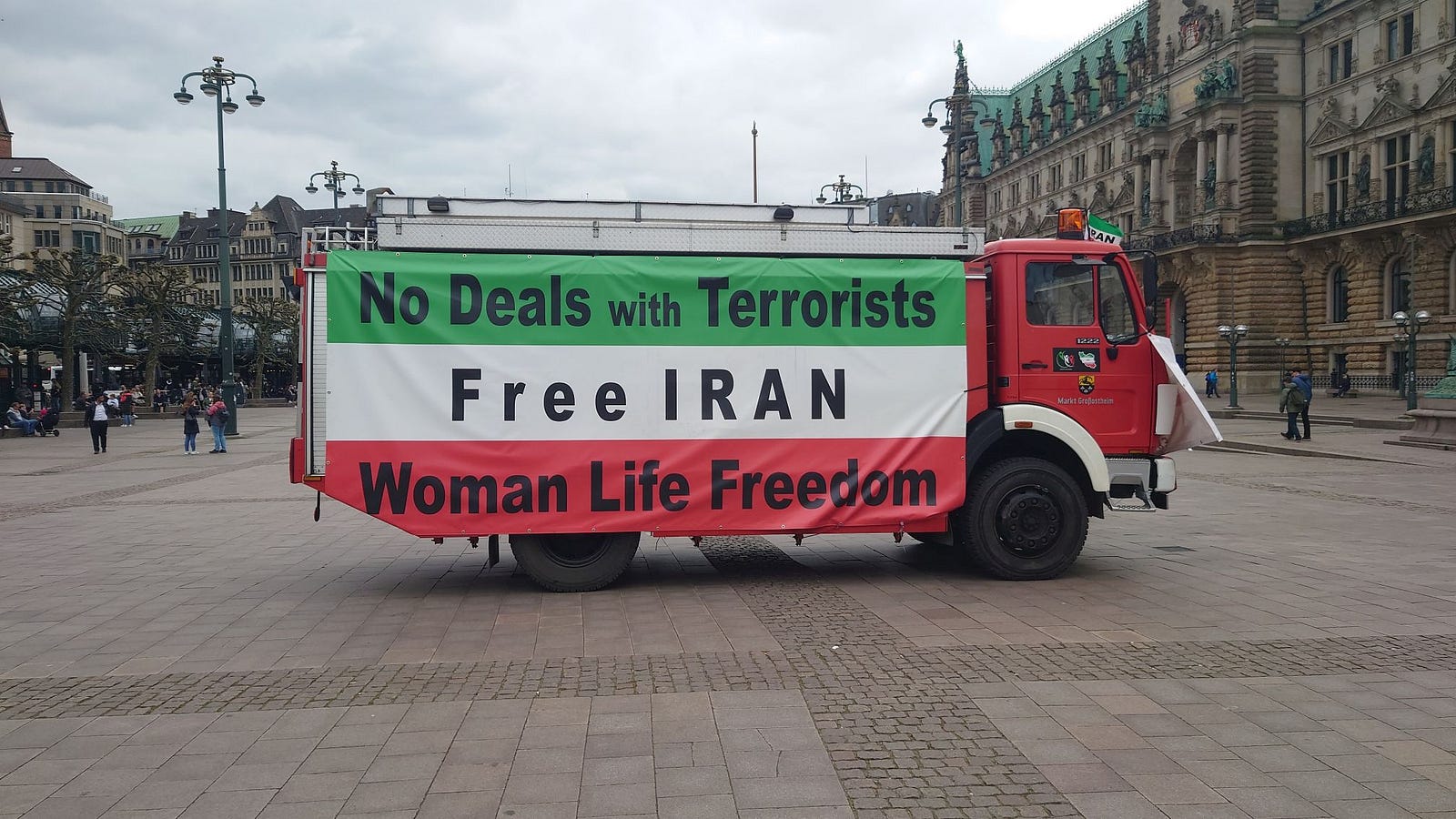
And Hezbollah is not simply a terrorist organization in the abstract: It is part of an Iranian terror network.
The U.S. Justice Department said in its September 2024 case against senior Hamas leaders that Hamas’s ability to carry out the October 7 massacres was fueled in part by the Iranian government, especially the IRGC and its Qods Force, and by the Lebanon-based Shiite terrorist organization Hizballah.
The same filing said Hamas leaders themselves acknowledged the importance of support from Iran and Hizballah to Hamas’s ability to carry out October 7. That does not sound like a disconnected local movement minding its own business inside Lebanon. It sounds like exactly what many of us have been saying all along: a proxy network.
Hamas did not emerge from a vacuum on October 7, commit the worst massacre of Jews since the Holocaust, and then just happen to find Hezbollah opening a second front the very next day out of spontaneous emotion.
Reuters reported at the time that Hezbollah said it was in “direct contact with the leadership of the Palestinian resistance” on October 7 itself. A few weeks later, Hezbollah, Hamas, and Islamic Jihad leaders were publicly discussing continued coordination.
And the Israelis, who live under this threat and bury the dead from it, plainly do not view Hezbollah as an innocent bystander.
IDF Chief of Staff Herzi Halevi said in February 2024 that “on the evening of October 7, Hezbollah decided to join in.” The Israeli military says Hezbollah had plans for an “Oct. 7-style attack” of its own in northern Israel. You do not have to pretend every operational detail is publicly known to understand the larger truth. Israel sees Hezbollah as part of the same terror architecture, not as some unrelated actor who wandered onto the stage after the curtain rose.
Current ceasefire diplomacy is inviting people to separate what should not be separated. Iran is objecting to Israeli strikes on Hezbollah in Lebanon and insisting Lebanon must be covered by the wider truce. Israel and the United States, meanwhile, have said Lebanon is not included, and Prime Minister Netanyahu has said any talks with Beirut would focus on disarming Hezbollah and establishing peaceful relations between Israel and Lebanon. In other words, Israel is treating Hezbollah not as a legitimate co-equal party to be appeased, but as an armed Iranian instrument that must be dismantled.
This is where the fog of war becomes especially dangerous.
Once civilians are dying, as they tragically are in Lebanon, many in the West instinctively begin speaking as if all armed actors in the region are morally interchangeable. They are not. Civilian suffering is real. It is terrible. It should never be treated lightly. But neither should it become a laundering mechanism for Hezbollah’s image.
A terrorist organization does not stop being a terrorist organization because it embeds itself inside a broken state, or because television anchors start referring to it with more delicate language. Hezbollah’s strategy has always depended in part on exactly that confusion.
The rational are inclined to trust Israel and the United States more than the Iranian regime and the IRGC about what kind of enemy Hezbollah is.
We should refuse to flatten the moral landscape until terrorist proxies and democracies all look like equivalent participants in an unfortunate misunderstanding. They are not equivalent. Hezbollah is aligned with Tehran, armed by Tehran, and treated by Tehran as part of its regional axis. Even Hezbollah’s own rhetoric has made that plain.
Hezbollah is not just another faction in a crowded Middle East chessboard. It is a terrorist organization — and it was long before Donald Trump took office.
It is an Iranian terror proxy. And if Israel insists that October 7 belongs to a wider network of terror rather than to Hamas alone, that is not paranoia. It is a recognition of how these groups actually operate: separately at times, yes, but strategically intertwined. The names change. The fronts shift. The talking points evolve. But the reality underneath is stubborn. And reality, inconvenient as it may be for diplomats, editorial boards, and people who hate Donald Trump, still matters.
(Contributing writer, Brooke Bell)