Versailles, American Independence, and the future of the French-American alliance
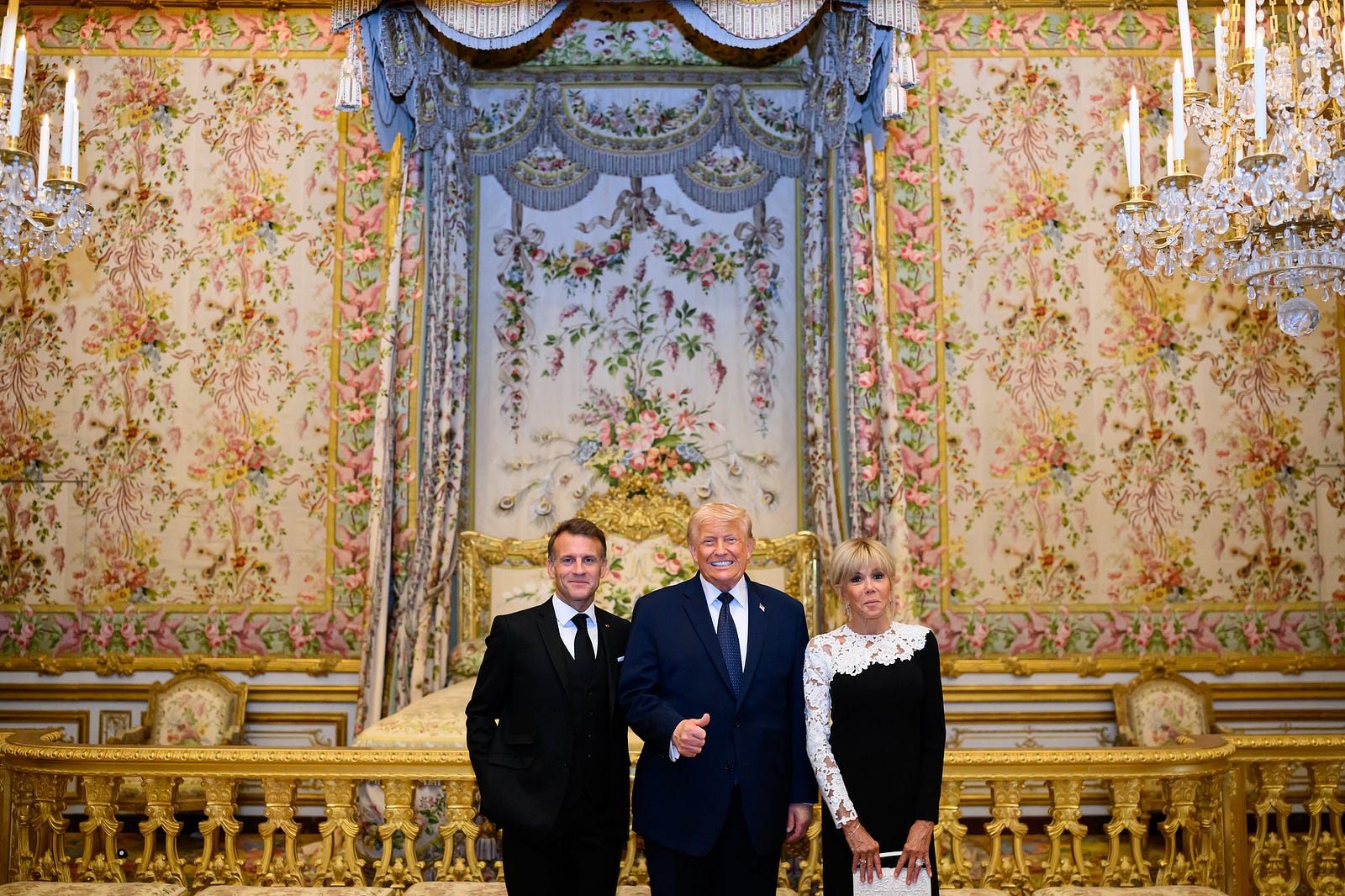
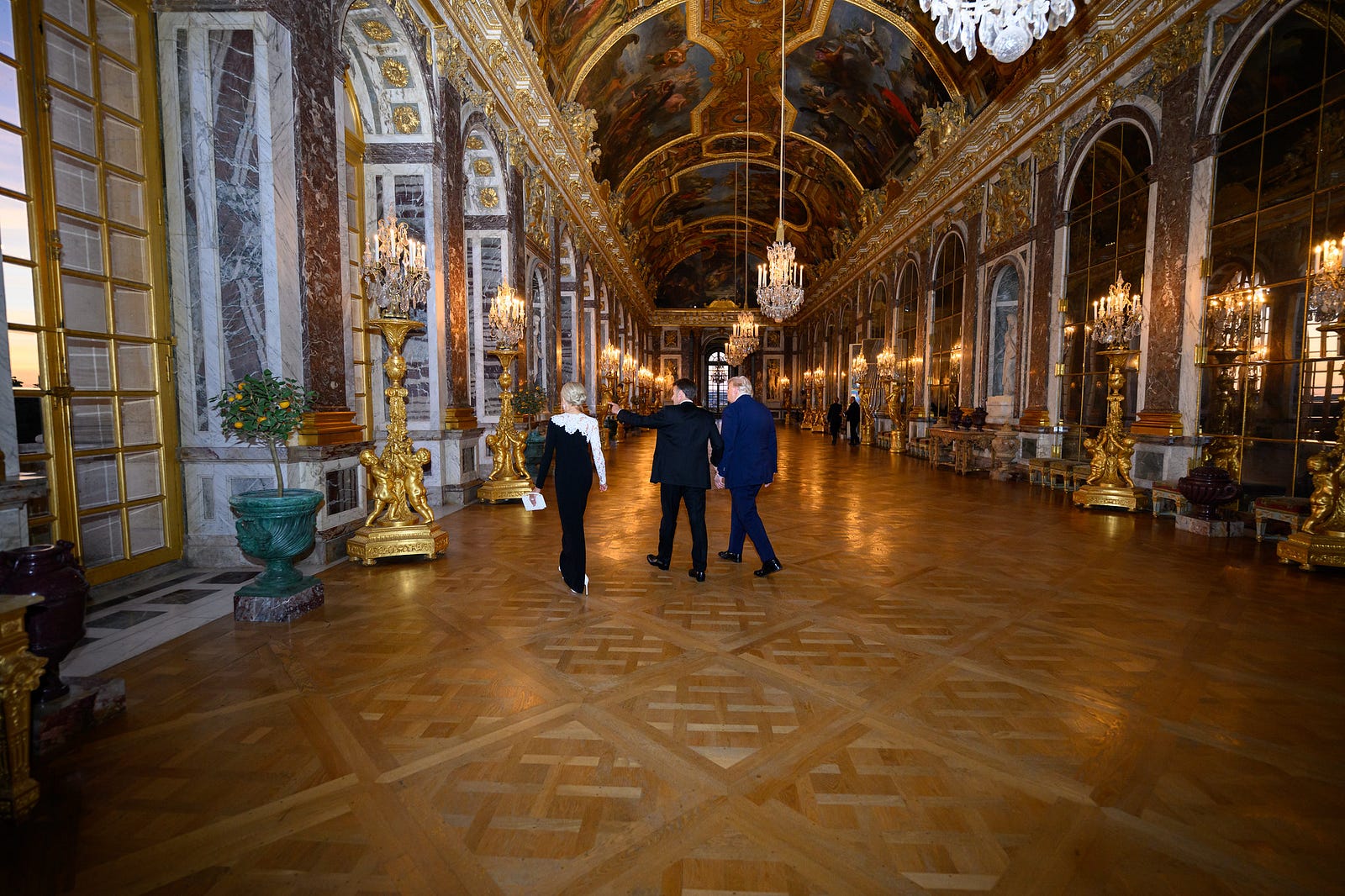
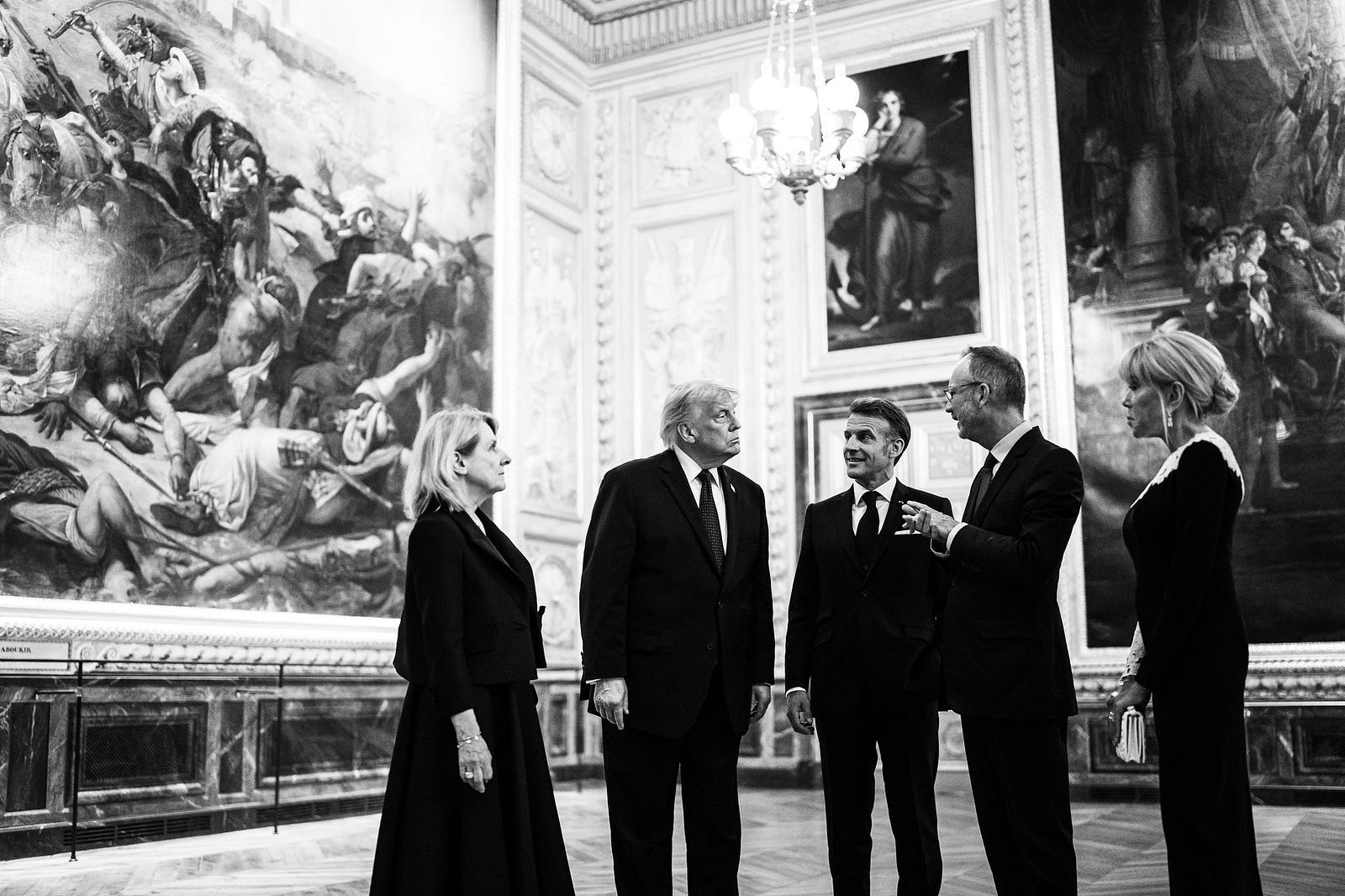
President Donald Trump’s tour last week of Versailles with French President Emmanuel Macron offered something rare in modern politics: a scene that felt larger than the argument of the day.
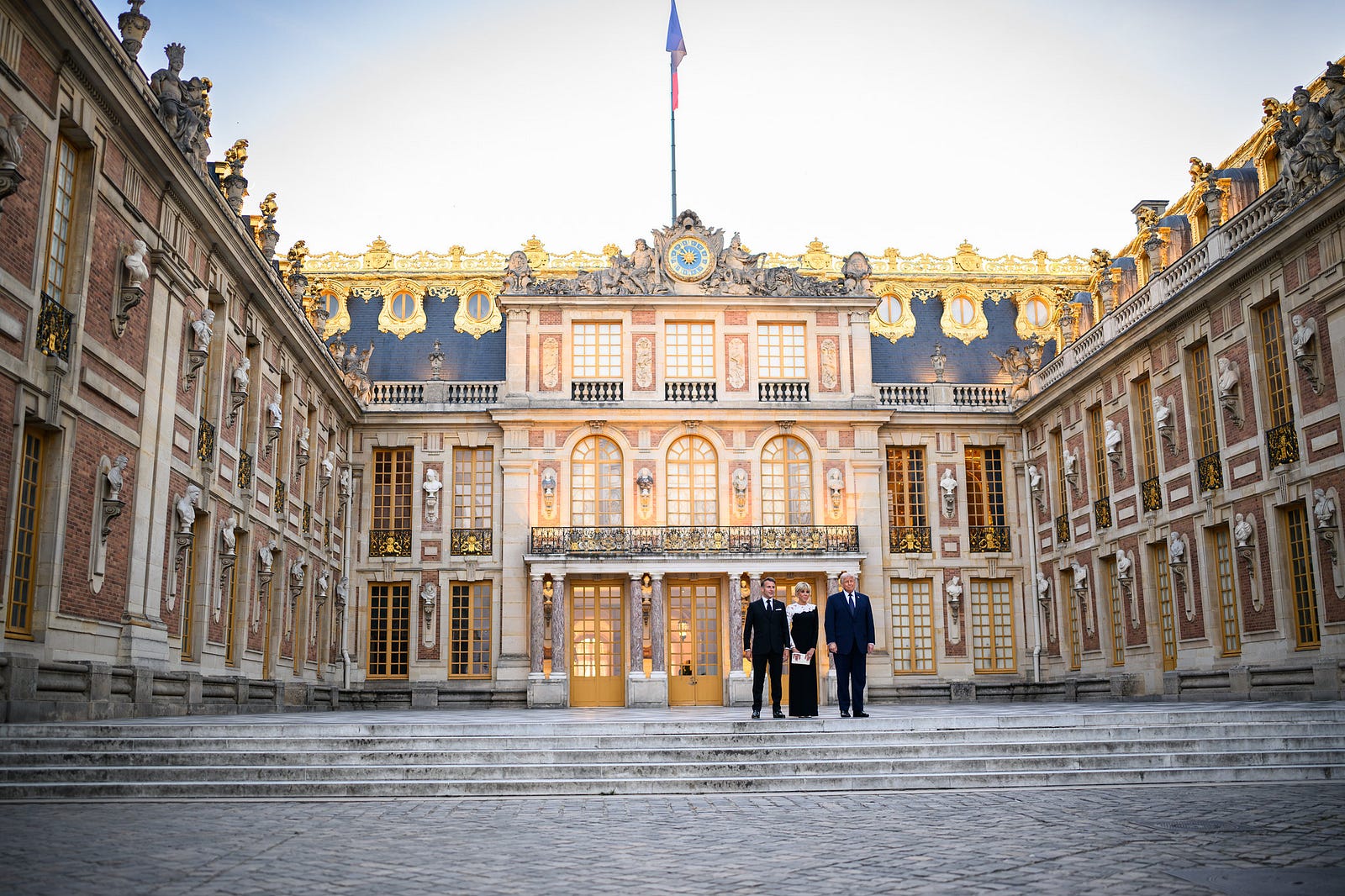
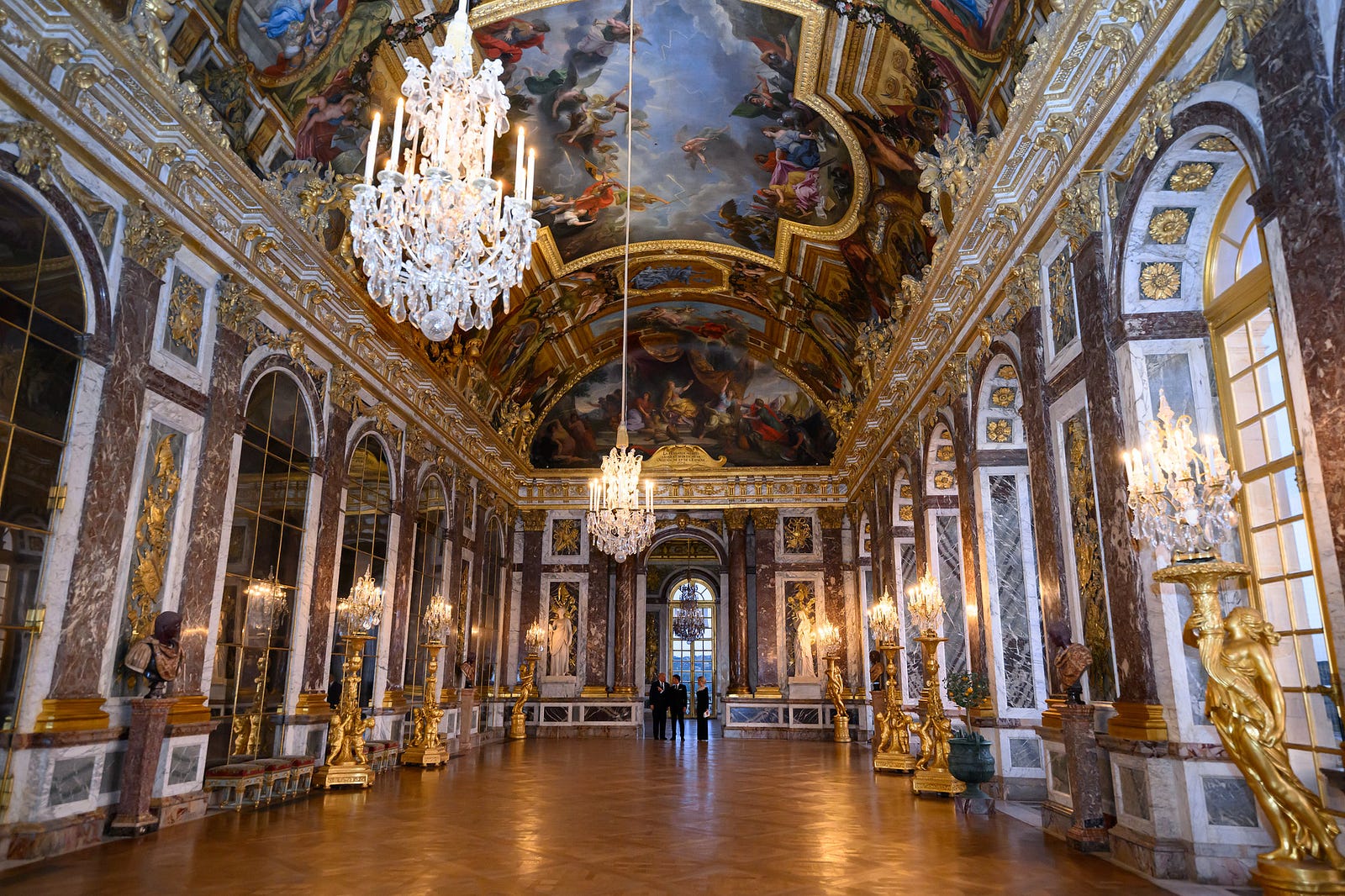
The setting did much of the work, of course. Versailles is not merely a palace. It is French memory in gold, marble, mirror, and stone. Its galleries were built to impress kings, ambassadors, rivals, and allies.
They even impressed Donald Trump.
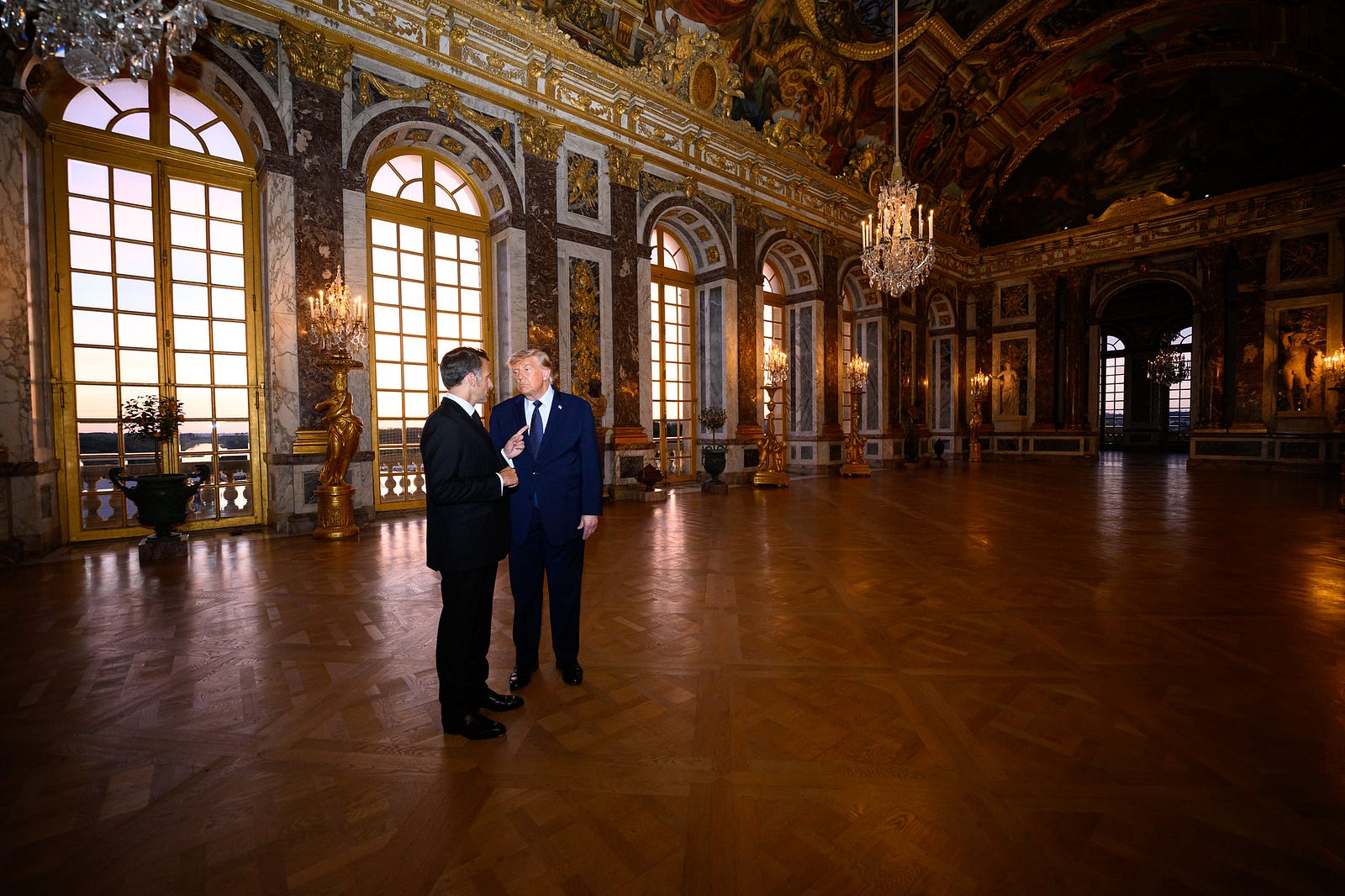
On this evening, as Macron guided an American president through the château after the G7 summit in Évian, the old palace served a newer purpose. It reminded both countries that the French-American alliance did not begin in a committee room. It began in revolution, risk, war, and shared belief.
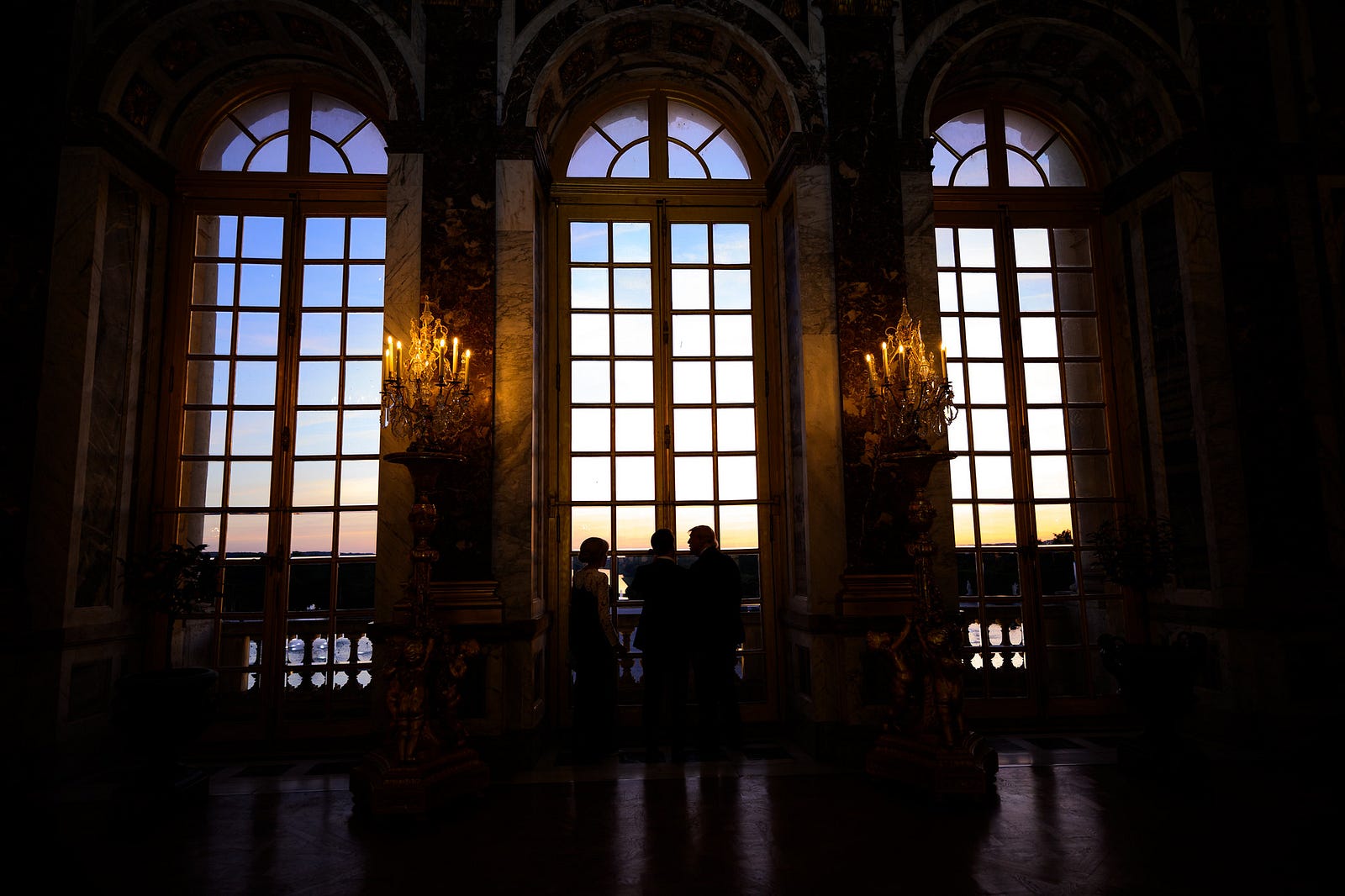
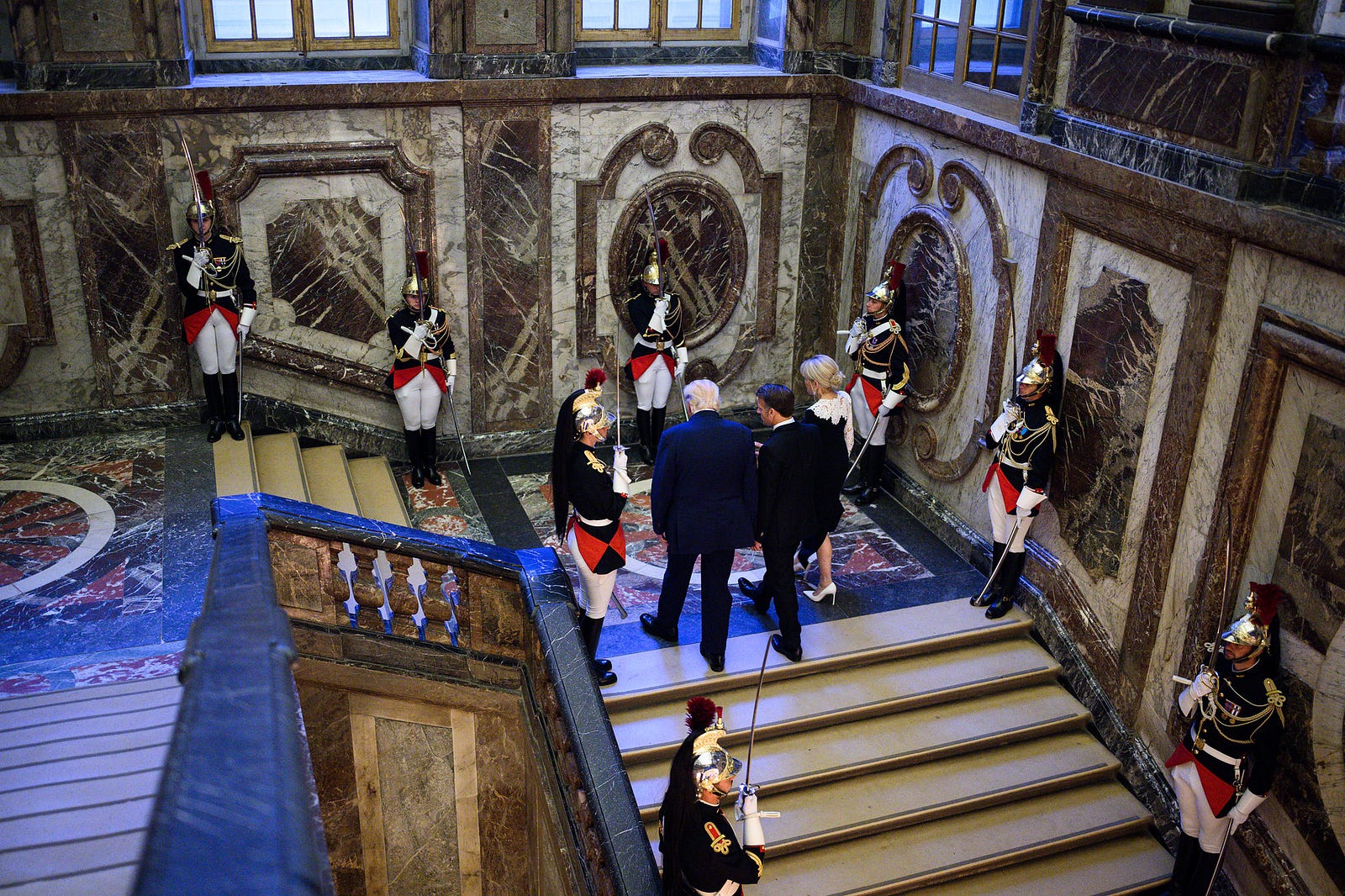
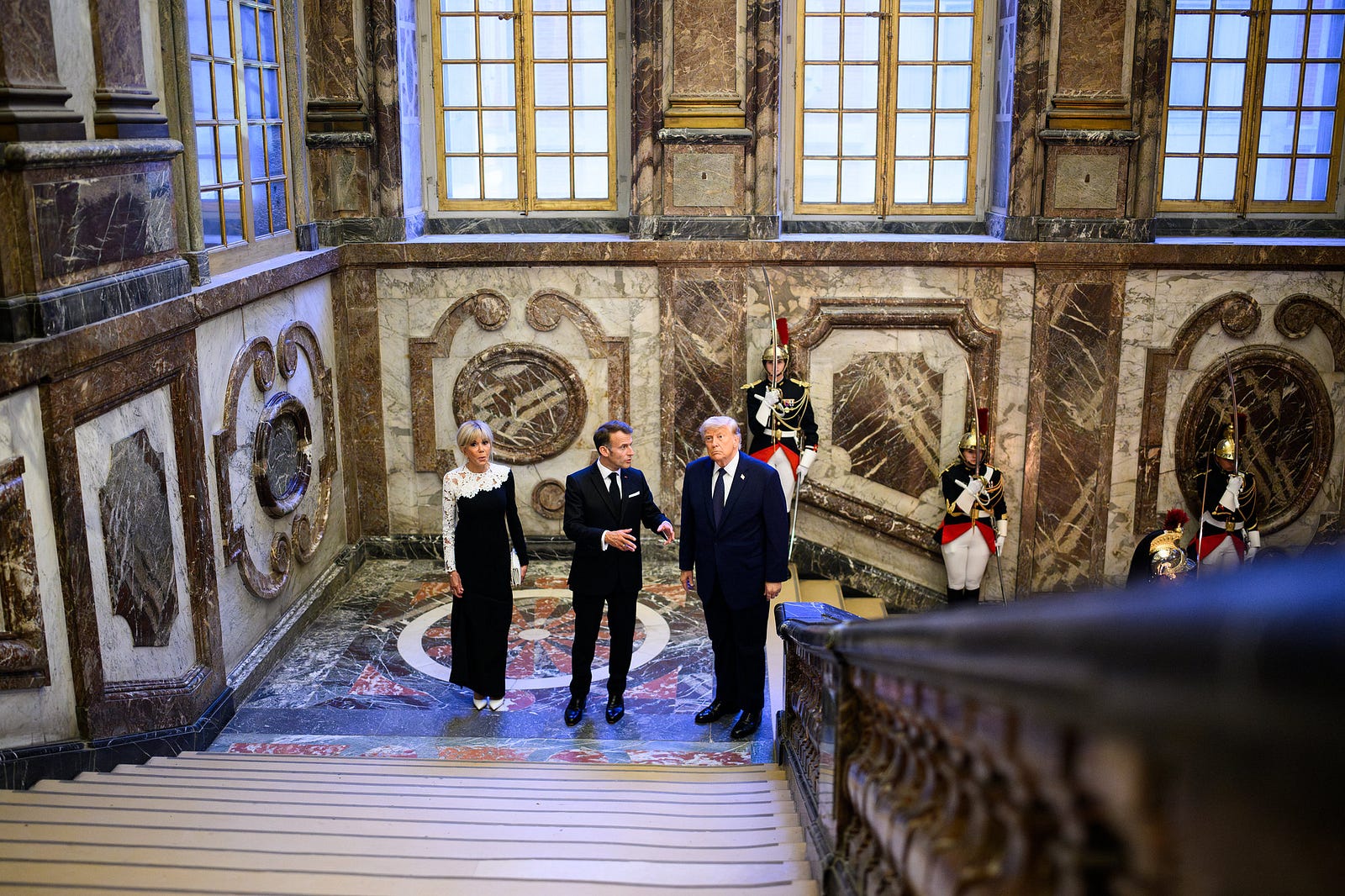
Macron and Brigitte Macron welcomed Trump at the palace steps before dinner, with the two presidents posing beneath the grandeur of one of Europe’s most recognizable symbols.
Trump, who had already praised Versailles as “the real deal,” appeared plainly delighted by the setting. The photographs told the story: the American president beside the French president, framed by centuries of French history, at a moment when the world’s leading democracies had just spent days debating Iran, Ukraine, trade, technology, and the future of the West.
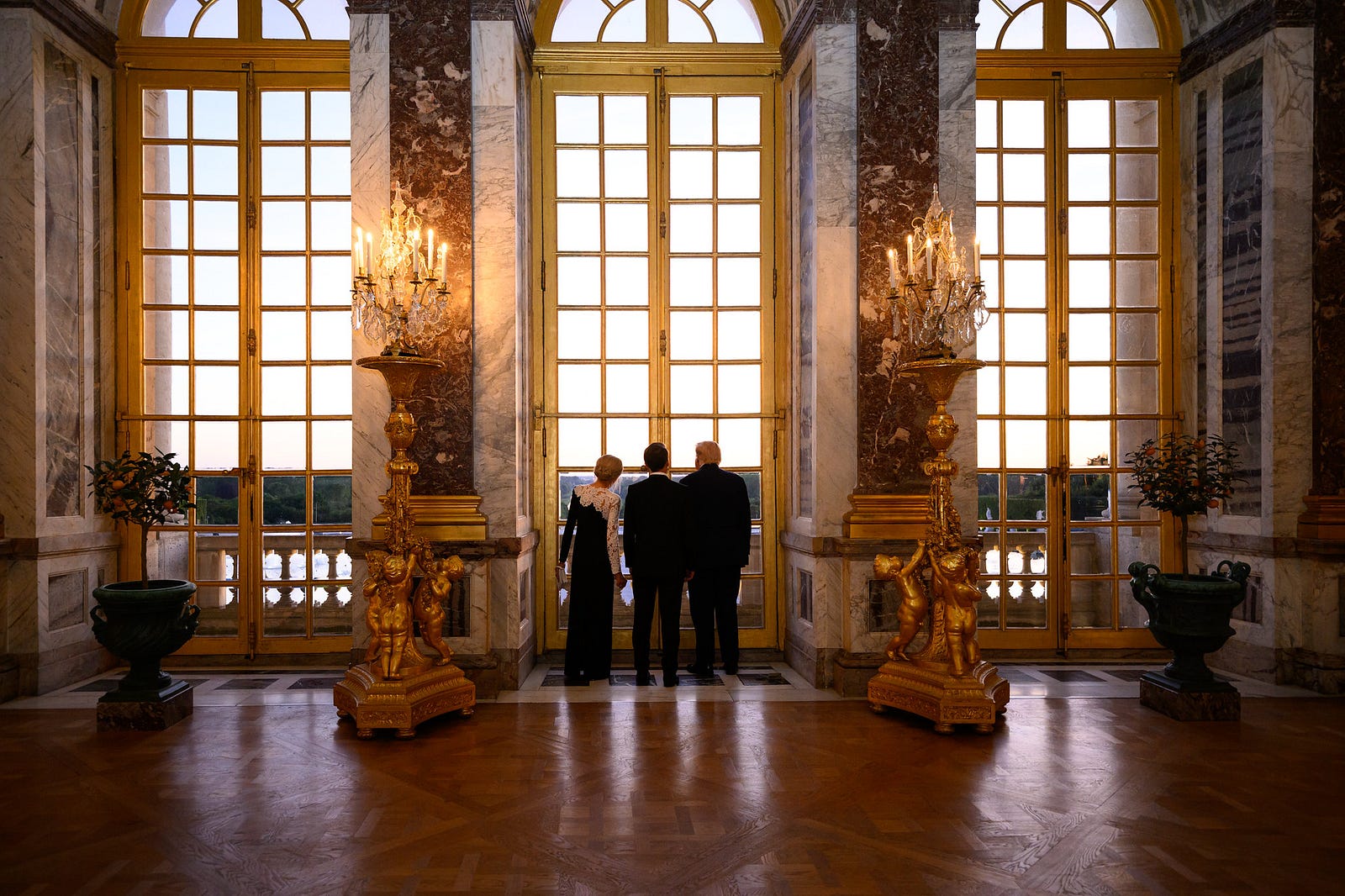
The timing was deliberate. The dinner marked the 250th anniversary of American independence, and the tour included the exhibition “Versailles and American Independence.”
It was at Versailles, after all, that the 1783 treaty recognizing the independence of the United States was signed. That fact gave the evening its emotional center. America’s founding was not a solitary act. France was there. France helped. France took the risk of backing a young republic before that republic had proved it would survive.
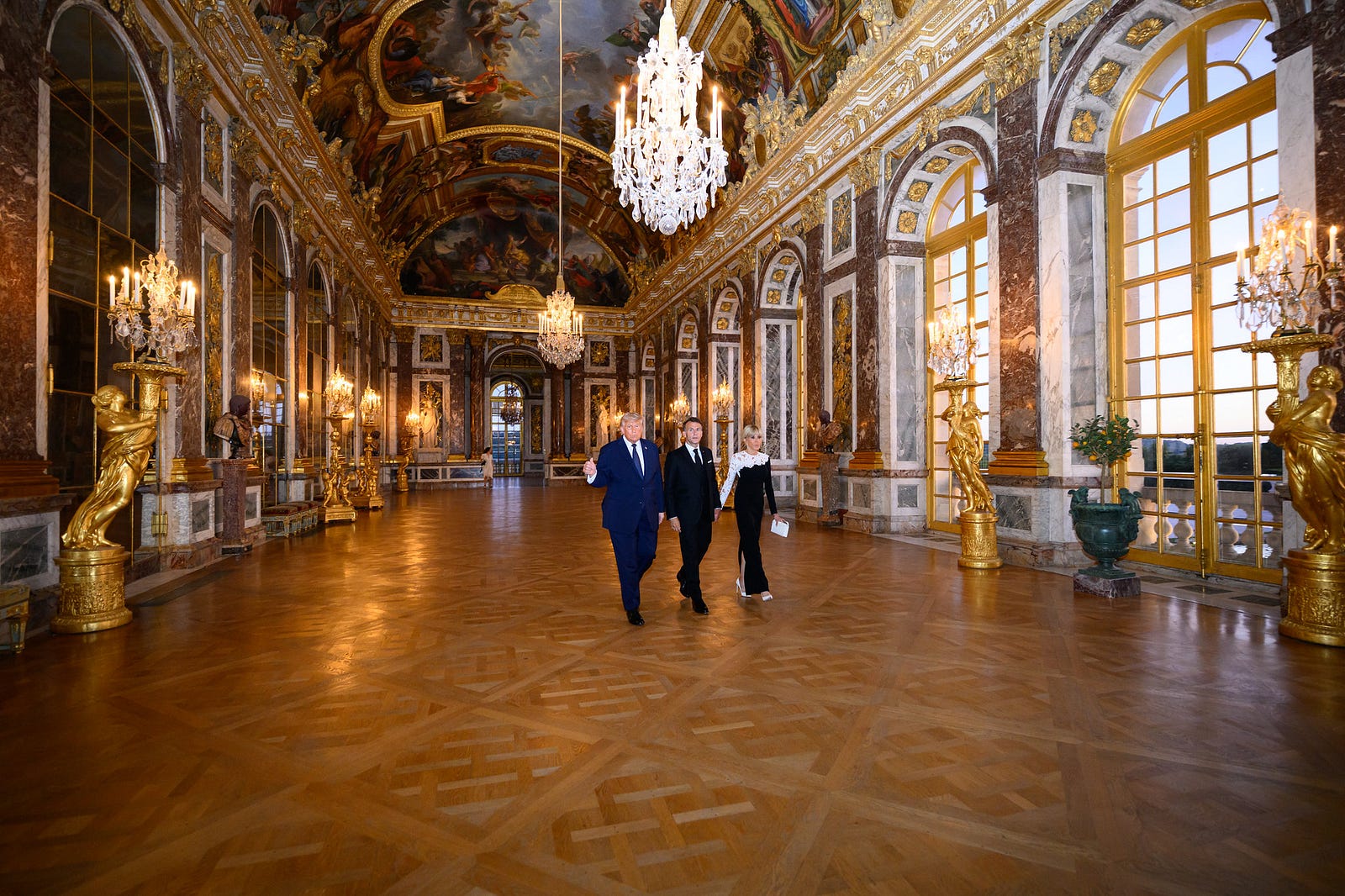
That history gave the G7 backdrop a warmer frame. The summit itself was full of serious business: Iran’s fragile peace framework, Ukraine’s survival, Russia’s aggression, energy security, and the economic uncertainty now pressing on ordinary citizens across the democratic world.
Yet at Versailles, the anxieties of the moment were set against a longer story. Allies disagree. They compete. They irritate each other. But the deepest alliances are not built on perfect agreement. They are built on memory, interest, respect, and the knowledge that some friendships are too important to abandon.
It helps that there is also another, more joyful French-American exchange happening right now on American soil. As the World Cup brings fans together across the United States, French culture is not confined to embassies or state dinners. It is showing up in watch parties, language centers, neighborhood gatherings, and crowded rooms of Americans and French expatriates cheering the same game.
In Washington, the Alliance Française is hosting World Cup screenings as part of its “France Forever” series, even reminding fans that the World Cup itself has French roots through Jules Rimet.
That is the best version of diplomacy: presidents at Versailles, fans in American cities, history in the background, and ordinary people carrying the alliance forward without needing a treaty to tell them to do it.
For one evening, amid war, trade tension, and political noise, Versailles offered a reminder of what still endures. France and America began as partners in the cause of independence.
Two hundred fifty years later, the alliance is still being renewed — in palaces, on soccer fields, and wherever both nations choose to remember that they have built something worth keeping.
(Contributing writer, Brooke Bell)